
Power transmission belts are used in a wide range of machines to transfer power smoothly and efficiently. Among the many options available, the poly V belt has become a popular choice due to its compact design, flexibility, and reliable performance.
A poly V belt drive features multiple ribs that provide better grip and more efficient power transmission, even in high-speed applications. This makes it suitable for industrial equipment, automotive systems, compressors, and many other machines. Different profiles, including the widely used PK belt, are available to meet specific operating requirements.
In this guide, we will explain what a poly V belt is, how it works, its benefits, and the industries where it is commonly used.
What Is a Poly V Belt?
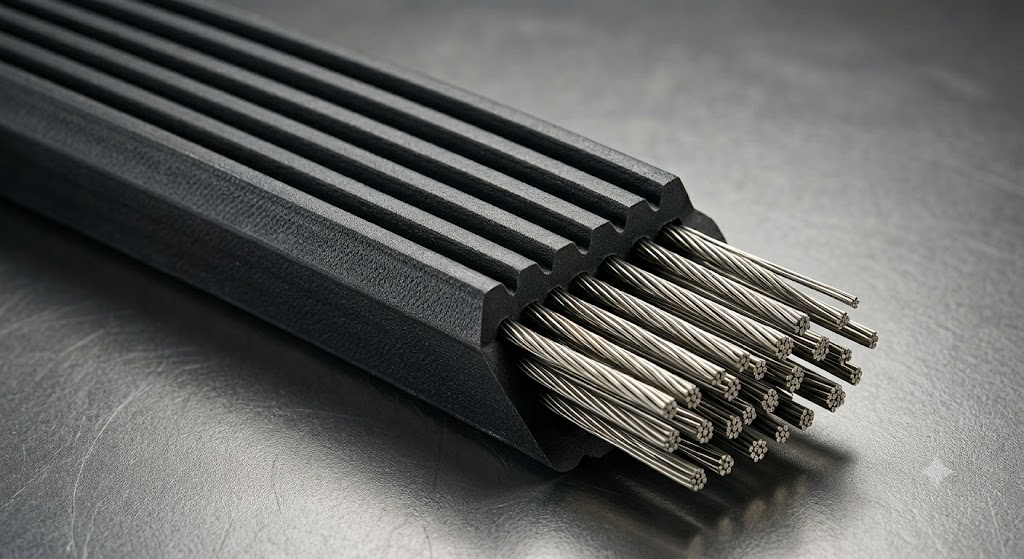
A poly V belt is a power-transmission belt that features multiple V-shaped ribs running along its length. These ribs fit into matching grooves on the pulley, helping the belt transfer power efficiently from one component to another.
Unlike traditional V-belts, which use a single groove, a poly V belt combines several ribs into a single belt. This design provides a larger contact area with the pulley, resulting in better grip and smoother operation.
Because of its flexibility and compact design, this type of belt is widely used in machinery where reliable performance and efficient power transfer are important.
How Does a Poly V Belt Drive Work?
A poly V belt drive transfers power between pulleys through a series of ribbed grooves that provide a firm grip and smooth movement. Its design helps machines operate efficiently while reducing power loss during transmission.
The Working Process
1) Driving Pulley Rotates – The first step is the rotation of the driving pulley using the motor or another energy source.
2) Belt Ribs Engage with Pulley Grooves – The ribs of the poly V belt fit into the matching grooves of the pulley. This close contact helps create a secure grip and minimises the chances of slipping during operation.
3) Power Is Transferred – As the belt moves along the pulleys, it carries power from the driving pulley to the driven pulley. The ribbed design allows this transfer to happen smoothly and efficiently.
4) Driven Pulley Starts Operating – The driven pulley receives the transmitted power and begins rotating. This movement enables the connected machine or equipment to perform its intended function.
5) Smooth and Efficient Performance – Because the belt has multiple ribs, the load is distributed more evenly across the pulley surface. This helps reduce vibration, supports higher operating speeds, and improves the overall efficiency of the poly V belt drive.
Key Components of a Poly V Belt
A poly V belt is built from multiple layers that work together to ensure smooth, reliable power transmission. Each part plays an important role in improving strength, flexibility, and performance.
1) Ribbed Rubber Surface – The outer ribbed surface is the working part of the belt that directly connects with the pulley grooves. It helps maintain a strong grip and smooth movement during operation.
2) Tensile Cord Reinforcement – The inner side of the belt consists of tensile cords that withstand tension and load. They do not allow stretching and increase the belt’s stability.
3) Compression Section – This layer supports the belt structure and helps absorb pressure during continuous operation. It also improves the belt’s ability to run smoothly under load.
4) Pulley Compatibility – Due to its design, a poly V belt is compatible with grooved pulleys. This compatibility enhances performance efficiency and minimises wear.
5) Importance of Belt Construction – The construction of the belt itself is an important factor affecting its durability. A properly constructed belt provides constant performance in an industrial environment.
Major Benefits of Using Poly V Belts
A poly V belt is widely used in modern machinery because it offers multiple performance and maintenance advantages. It is designed to improve efficiency while reducing operational issues.
1) Higher Power Transmission Efficiency – The ribbed design increases contact with the pulley surface, allowing smoother and more efficient power transfer.
2) Compact Drive Design – A poly V belt drive requires less space than traditional belt systems. This makes it suitable for compact machinery layouts.
3) Reduced Noise and Vibration – Because of its smooth pulley fit, noise and vibration are reduced during operation, thereby increasing the equipment’s efficiency.
4) Better Flexibility on Small Pulleys – The belt can easily operate on smaller pulley diameters without losing efficiency, making it highly versatile.
5) Longer Service Life – Because of the robust construction and equalised weight, the belt is durable.
6) Lower Maintenance Requirements – A poly V belt requires less frequent adjustment and maintenance, helping reduce downtime and operational effort.
Understanding PK Belt and Other Poly V Belt Profiles
Different machines require different belt profiles. A poly V belt comes in several standard types, designed to suit light, medium, and heavy-duty applications.
Common Poly V Belt Profiles
- PJ Profile: Used in light-duty machines where compact size and smooth operation are important.
- PK Belt: The PK belt is one of the most widely used profiles in industrial and automotive applications. It offers a good balance of flexibility and power transmission.
- PL Profile: Designed for medium-duty equipment where higher load handling is required.
- PM Profile: Used in heavy-duty machinery where strong power transmission is needed.
Choosing the Right Profile
- Machine load requirements
- Pulley size and design
- Operating speed conditions
- Application type (industrial or automotive)
Selecting the right profile ensures better performance and longer belt life.
Common Applications of Poly V Belts Across Industries
A poly V belt drive is used in many industries because it provides smooth, fast, and reliable power transmission. Its compact design makes it suitable for a wide range of machines.
1) Manufacturing Equipment – Used in machines that require continuous and stable power transfer for production work.
2) HVAC Systems – Commonly used in fans, blowers, and air-circulation systems where smooth, quiet operation is important.
3) Compressors and Pumps – Contributes to smooth power transfer, ensuring the effective operation of compressors and pump mechanisms.
4) Packaging Machinery – Ideal for high-speed packaging lines that require accuracy and consistency.
5) Automotive Systems – PK belt is a popular choice for automotive engines and auxiliary components.
6) Material Handling Equipment – Supports conveyors and lifting systems where continuous movement is essential.
Poly V Belt vs Traditional V-Belt: Which Is Better?
Both belt types are used for power transmission, but they differ in performance, design, and efficiency. A poly V belt is generally preferred in modern machines due to its improved design and smoother operation.
| Feature | Poly V Belt | Traditional V-Belt |
| Design | Multiple ribbed structure | Single V-shaped design |
| Power Transmission | More efficient and stable | Moderate efficiency |
| Space Requirement | Compact system | Requires more space |
| Slippage | Very low slippage | Higher chances of slippage |
| Noise Level | Smooth and quiet operation | Comparatively noisier |
| Speed Handling | Suitable for high-speed applications | Limited high-speed performance |
| Maintenance | Lower maintenance | Requires more frequent checks |
A poly V belt drive performs better in compact, high-speed systems, where efficiency and smooth operation are important. Traditional V-belts are still used in basic applications but are gradually being replaced in modern machinery setups.
How to Choose the Right Poly V Belt for Your Application
Choosing the correct poly V belt is important for smooth performance, longer life, and reduced machine downtime. The right selection depends on how and where the belt will be used.
1) Machine Load Requirement – More demanding loads require belts with more rugged profiles. Ensure that you always match the belt strength to the machine’s load.
2) Operating Speed – High-speed machines require a stable poly V belt drive that can handle continuous rotation without slipping or overheating.
3) Pulley Size and Design – For the belt to function effectively, ensure it fits well into the pulley’s groove.
4) Application Type – Every machine requires different belt profiles. For instance, PK belts have extensive applications in the automobile industry and other industries.
5) Working Environment – Dust, heat, and moisture can affect belt performance. It is important to choose a belt that can handle the surrounding conditions.
6) Quality and Manufacturing Standard – Always choose reliable poly V belt manufacturers to ensure consistent quality, durability, and better performance over time.
Choosing the Right Poly V Belt for Reliable Power Transmission
Poly V belts have become popular choices for their efficiency and reliability, offering smooth power transfer, compactness, and consistent performance. The ribbed surface of the Poly V belt reduces slippage and improves its grip, thus enabling efficient operation at high speeds and under constant conditions. Various belt profiles are available, such as the PK belt.
When it comes to dependable industrial belt solutions, Jigna Sales plays a key role in the market. They are known for supplying a wide range of power transmission products, including poly V belts, designed to meet varied industrial needs. Their products are used across manufacturing, automotive, HVAC, and other engineering applications where performance and durability are important.