
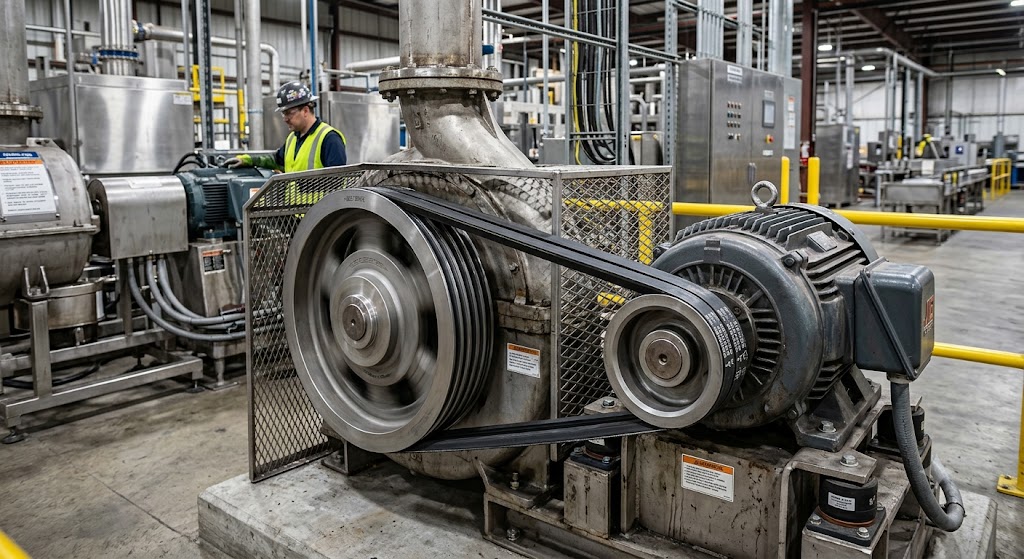
Industrial machines need steady power to run well. Even a short break in power transfer can slow work, increase maintenance needs, and affect productivity. That is why belt-driven systems are still widely used across many industries.
A good V-belt drive helps move power smoothly from one part of a machine to another. It reduces energy loss and supports reliable performance every day.
Many businesses also prefer working with trusted V-belt manufacturers in India. The right belt and the correct V-belt section can improve efficiency and help prevent unexpected downtime.
Why Smooth Power Transmission Matters in Industrial Operations
Smooth power transmission keeps machines running without frequent stops. It helps equipment perform better and lowers the risk of breakdowns.
When power moves steadily, different machine parts work together more effectively. This reduces wear and helps businesses avoid costly repairs and delays.
Some key benefits include:
- Reduced vibration during operation.
- Better coordination between moving components.
- Lower wear on bearings and pulleys.
- Improved production efficiency.
- Fewer maintenance-related stoppages.
Many industries choose a reliable V-belt drive because it can handle sudden loads and reduce shocks during operation. A V-belt system is also easy to maintain and works well across a range of applications.
The right power transmission system helps machines use energy more efficiently. It can lower running costs and support smooth performance throughout the year.
How a V-Belt Drive Transfers Power Efficiently
A V-belt drive has a simple design. The belt sits inside matching pulley grooves, which gives it a strong grip during operation.
As the belt moves, it fits tightly into the pulley and transfers power smoothly. This helps reduce slipping and keeps the machine running efficiently.
The process works in the following manner:
- The motor rotates the driving pulley.
- The V-belt carries rotational energy.
- The driven pulley receives the transmitted power.
- The connected equipment performs its intended function.
This mechanism provides several operational advantages:
- Better shock absorption.
- Stable performance at different speeds.
- Reduced noise during operation.
- Lower chances of sudden belt movement.
- Efficient power delivery over extended periods.
A flat belt drive often needs more space and proper alignment to work well. A V-belt drive, on the other hand, fits easily into compact machines and provides a better grip.
This is one reason why many industries choose V-belt systems for everyday operations. They are reliable, easy to maintain, and work well under different conditions.
Features That Make V-Belts Ideal for Industrial Applications
The right V-belt can improve machine performance and support smooth daily operations. It works well for both heavy-duty equipment and machines that handle lighter loads.
Some important features include:
- Strong grip on pulleys.
- Reduced slippage during operation.
- Quiet functioning.
- Easy installation and replacement.
- The capability to absorb sudden loads.
Another important factor is selecting the correct V-belt section. Different machinery requires different belt dimensions and load capacities. Using the appropriate section helps improve efficiency and extend service life.
For example, V-belts are widely used in machines that need reliable performance in limited space. They are flexible, easy to use, and help transfer power smoothly.
Machine operators should always verify:
- Pulley compatibility.
- Required speed ratios.
- Operating temperature.
- Load conditions.
- Maintenance schedules.
V-Belt Drive vs Flat-Belt Drive: Which One Supports Smoother Operations?
| Feature | V-Belt Drive | Flat Belt Drive |
| Grip on pulleys | High | Moderate |
| Slippage | Lower | Comparatively higher |
| Space requirement | Compact | Requires more space |
| Shock absorption | Better | Moderate |
| Heavy-duty applications | Highly suitable | Limited in some cases |
| Maintenance | Simple | Requires careful alignment |
A flat belt drive works well when the distance between shafts is longer, and the load is lighter. Many industries still use a flat belt drive because it is simple and cost-effective.
For demanding jobs, many industries choose a V-belt drive. It offers a better grip and helps power moves move smoothly from one part to another.
Both systems work well in different situations. The best option depends on the machine, its workload, and how it is used.
Common Industrial Applications That Depend on V-Belt Systems
A V-belt is used in many industries because it offers smooth and reliable power transfer. It helps machines run efficiently and supports various industrial operations.
Common applications include:
1. Manufacturing Plants
Machines in factories need to run without frequent stops. A reliable V-belt drive helps keep production moving smoothly.
2. Textile Machinery
Textile machines need steady speeds and less vibration. The right belt system helps maintain consistent output.
3. Agricultural Equipment
Farm equipment often works in tough conditions. A V-belt offers the flexibility needed for daily operations.
4. Packaging Units
Packaging lines depend on smooth and steady movement. Good power transmission helps reduce delays and improve efficiency.
5. HVAC Systems
Heating and cooling systems commonly use V-belts. They help transfer power smoothly and keep noise levels low.
6. Material Handling Equipment
Conveyors and similar equipment need reliable power delivery. V-belts help reduce maintenance and support continuous operation.
No matter the industry, choosing the right V-belt plays an important role in long-term machine performance.
Choosing the Right Belt for Long-Term Performance
Selecting the right belt involves more than matching dimensions. Businesses must consider operating conditions and future maintenance needs.
A simple checklist includes:
- Evaluate machine load requirements.
- Determine operating speeds.
- Review environmental conditions.
- Check pulley compatibility.
- Select the appropriate V-belt section.
Choosing the right belt becomes easier when businesses work with trusted V-belt manufacturers in India. They can guide customers and recommend products that suit different machines and working conditions.
Many companies choose experienced V-belt manufacturers in India because they offer:
- Good and reliable product quality.
- Different belt sizes and sections.
- Helpful technical guidance.
- On-time deliveries.
- Solutions for various industrial needs.
Businesses need belts that last longer and keep machines running smoothly. Choosing a trusted supplier helps reduce breakdowns and maintenance issues.
Keeping Industries Running Smoothly
Smooth power transmission keeps machines running well. It reduces wear, cuts downtime, and helps work continue without delays.
A good V-belt drive offers a strong grip and handles changing loads with ease. Some machines use flat belt drives, but many industries choose V-belts because they are reliable and easy to maintain.
Jigna Sales supplies industrial belt solutions for a wide range of machines. The company focuses on quality products and helps businesses select the right belt for their needs. Known as a trusted V-belt manufacturer in India, Jigna Sales serves industries that require durable, dependable power transmission products.
Explore Jigna Sales’ V-belt range and connect with their team to find the right fit for your operations.

