
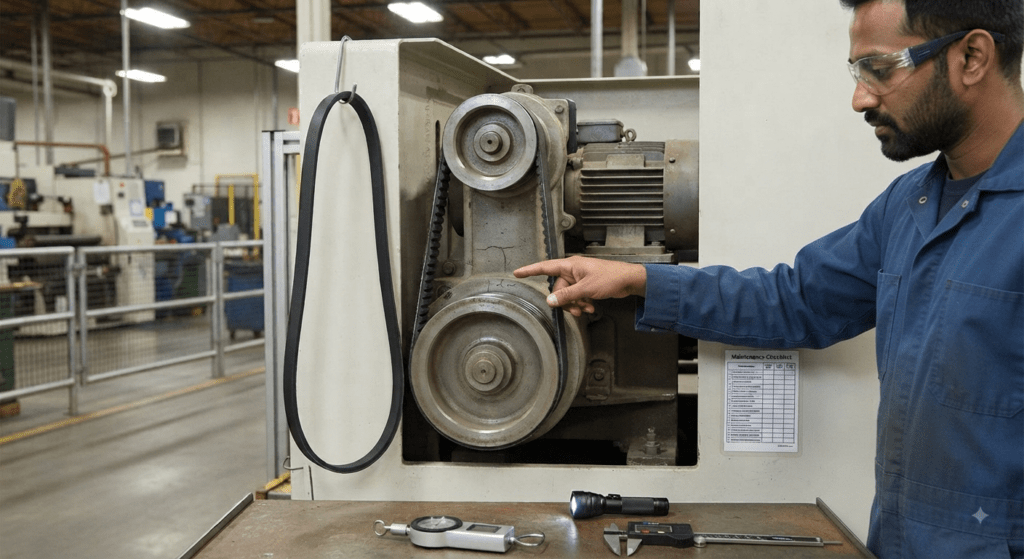
Industrial machinery depends on reliable power transmission to keep production running smoothly. Whether it is a conveyor system, packaging machine, textile equipment, or another industrial application, belts play an important role in transferring power between components. However, like any mechanical part, belts wear out over time and need timely replacement.
Ignoring signs of belt damage can lead to unexpected breakdowns, lower machine efficiency, and costly downtime. This is why regular inspection and preventive maintenance are essential for every production facility. While standard V-belts are widely used, the Poly V belt has become a preferred choice for many high-speed applications because of its flexibility and efficient power transmission.
In this blog, we explain the common signs that indicate it is time to replace V-belts and Poly-V belts, how regular maintenance improves their lifespan, and what to consider when selecting a replacement.
Why Belt Condition Directly Affects Machine Performance
Power transmission belts operate continuously under tension, friction, and changing loads. Over time, these conditions gradually reduce their performance.
A worn belt may cause:
- Reduced power transmission
- Machine vibration
- Lower operational efficiency
- Increased energy consumption
- Unexpected equipment stoppages
- Faster wear of connected components
A well-maintained Poly V belt drive helps machines operate smoothly while reducing unnecessary stress on motors, pulleys, and bearings.
Regular inspections allow maintenance teams to identify problems before they affect production.
What Are the First Signs That a Belt Needs Replacement?
Belts rarely fail without warning. In most cases, visible or operational signs appear well before completing failure.
Some of the earliest indicators include:
1. Visible Cracks – Small surface cracks are often one of the first signs of ageing. Although minor cracking may not immediately stop production, it indicates that the belt material has started to deteriorate.
2. Frayed Edges – Damaged belt edges suggest misalignment, excessive wear, or improper installation.
3. Glazed Surface – A shiny belt surface usually indicates excessive slipping. This reduces grip and lowers transmission efficiency.
4. Missing Ribs – For a Poly V belt, damaged or missing ribs affect contact with the pulley, resulting in poor performance.
These signs should never be ignored because they often lead to larger mechanical problems.
Why Does a Poly-V Belt Wear Out Over Time?
Every industrial belt experience natural wear during operation.
Several factors contribute to belt deterioration:
- Continuous operation
- High temperatures
- Dust accumulation
- Improper tension
- Pulley misalignment
- Heavy loading
- Poor maintenance
Although modern PK belt designs offer excellent durability, they still require routine inspection. Replacing a worn belt before failure helps prevent unexpected machine downtime.
Listen To Your Machine During Daily Operation
Machines often provide early warning signs through sound and vibration.
Pay attention to:
- Squealing noises
- Slapping sounds
- Excessive vibration
- Irregular movement
- Reduced operating smoothness
These symptoms may indicate slipping, incorrect tension, or belt wear.
A properly functioning Poly V belt drive operates quietly and delivers smooth, consistent power transmission.
Maintenance teams should investigate unusual machine behaviour as soon as possible.
How Does Improper Belt Tension Reduce Belt Life?
Correct belt tension is essential for reliable performance.
If the belt is too tight, excessive stress is placed on:
- Bearings
- Shafts
- Pulleys
- Belt material
If the belt is too loose, problems such as slipping and reduced efficiency become more common.
A Poly V belt performs best when installed according to the manufacturer’s recommended tension. Regular tension checks can significantly increase belt life while improving machine performance.
What Happens If You Continue Using A Worn Belt?
Many businesses delay belt replacement until complete failure occurs. Although this may seem cost-effective, it often leads to higher expenses.
Continuing to operate with damaged belts may result in:
- Production downtime
- Emergency repairs
- Increased maintenance costs
- Damage to pulleys
- Motor overload
- Lower productivity
Replacing a worn PK belt at the right time is usually far less expensive than repairing equipment damaged by belt failure.
Preventive maintenance always offers better long-term value.
Why Pulley Inspection Is Important
Replacing a belt alone may not solve recurring problems. Worn or damaged pulleys can shorten the life of a new belt.
During maintenance, inspect pulleys for:
- Uneven wear
- Rust
- Surface damage
- Dirt accumulation
- Misalignment
A healthy Poly V belt drive depends on both the belt and pulley working together efficiently. Ignoring pulley condition often results in repeated belt replacement.
Common Maintenance Practices That Extend Belt Life
Simple maintenance routines help improve reliability and reduce operating costs.
Recommended practices include:
- Inspect belts regularly.
- Clean pulleys during maintenance.
- Check alignment.
- Maintain correct belt tension.
- Replace damaged belts promptly.
- Avoid overloading machinery.
- Keep maintenance records.
These preventive measures help every Poly V belt deliver consistent performance throughout its service life.
Regular maintenance also improves workplace safety by reducing the risk of unexpected equipment failures.
Why Choosing the Right Replacement Belt Matters
Not all industrial belts are designed for the same operating conditions.
When replacing a belt, consider:
- Belt dimensions
- Machine specifications
- Load requirements
- Operating speed
- Environmental conditions
- Pulley compatibility
Using an incorrect PK belt may reduce efficiency and shorten the lifespan of both the belt and machine components.
Selecting the right product ensures smooth operation and dependable power transmission.
How Quality Manufacturers Improve Belt Performance
The quality of raw materials and manufacturing processes directly affects belt durability.
Reliable Poly V belt manufacturers focus on:
- Precision manufacturing
- Dimensional consistency
- Strong rubber compounds
- High-quality reinforcement materials
- Performance testing
- Wear resistance
These quality standards help belts perform consistently under demanding industrial conditions.
Businesses that choose products from trusted Poly V belt manufacturers often experience improved reliability and lower maintenance costs.
Where Should Businesses Source Industrial Belts?
Selecting the right supplier is as important as choosing the right product.
Experienced Poly V belt suppliers can assist with:
- Product selection
- Technical guidance
- Genuine industrial products
- Faster product availability
- Replacement recommendations
- Ongoing customer support
Working with knowledgeable Poly V belt suppliers helps businesses avoid compatibility issues while improving maintenance planning. Reliable supplier support also ensures quicker replacements when unexpected maintenance is required.
Why Preventive Maintenance Supports Long-Term Productivity
Many industrial failures can be prevented through routine inspection.
Instead of waiting for belts to fail, businesses should create preventive maintenance schedules that include:
- Visual inspections
- Belt tension checks
- Pulley alignment verification
- Noise monitoring
- Scheduled replacements
This proactive approach reduces downtime while improving overall equipment efficiency.
Whether using standard V-belts or a Poly V belt drive, preventive maintenance helps extend component life and improve production reliability.
Keep Your Machines Running with Timely Belt Replacement
Replacing worn belts at the right time is one of the simplest ways to improve machine reliability and reduce maintenance costs. Watching for signs such as cracks, frayed edges, unusual noise, slipping, and poor performance allows maintenance teams to act before minor wear becomes a major problem. Combined with regular inspections and proper installation, timely replacement helps industrial equipment operate efficiently for longer periods.
Jigna Sales supports industries by offering reliable power transmission solutions for a wide range of applications. They work with trusted Poly V belt manufacturers to supply high-quality products that meet industrial performance requirements. Businesses looking for dependable Poly V belt suppliers can rely on their experience to choose the right PK belt or Poly V belt for their machinery. Their focus on product quality and customer support helps industries maintain efficient Poly V belt drive systems while reducing downtime and improving operational reliability.