
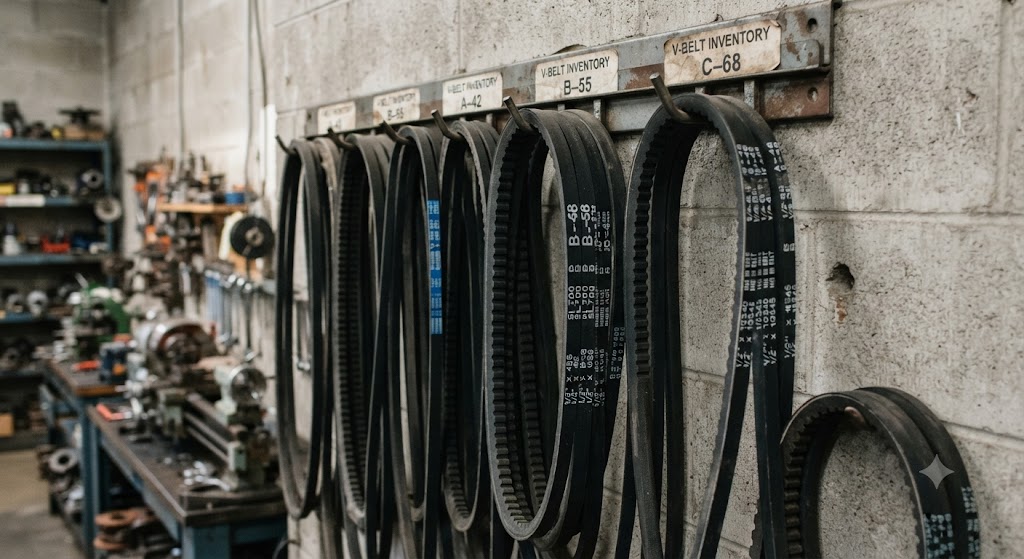
Industrial machinery depends a lot on steady and reliable power transfer. When belts slip, wear down, or snap, it leads to frustrating downtime and slowed operations. Because dependable power transmission is so important, rubber V-Belts continue to be a popular and trusted choice in the industry.
Rubber V-Belts transfer power from one rotating shaft to another through pulleys. Their V-shaped design provides a firm grip while the rubber construction gives the belt flexibility during operation. They are also available in different sizes and profiles to suit various machines.
While many modern industries rely on various types of belts for their operations, V-Belts continue to be a dependable and affordable option for everyday power transmission. Understanding their specific benefits, common uses, and maintenance needs helps businesses make informed choices and select the best belt systems to keep their equipment running smoothly and last longer.
What makes rubber V-Belts ideal for industrial machinery?
Rubber V-belts deliver dependable power transfer, smoothly running over pulleys and fitting snugly into their grooves.
Some important features include:
- Good friction between the belt and pulley
- Flexible construction for smooth movement
- Resistance to normal operating wear
- Ability to handle different load conditions
- Simple installation and replacement
- Availability in different sizes and profiles
The V-shaped cross-section is one of the main reasons these belts provide a good grip. When the belt sits inside the pulley groove, it maintains contact as the pulley rotates.
For many machines, this simple arrangement provides dependable power transmission without a complicated drive system.
How do rubber v-belts transfer power?
A typical V-belt drive consists of a driving pulley, a driven pulley, and a belt that links them. The motor turns the driving pulley, causing the belt to move and transfer power to the driven pulley.
The process involves three main stages:
- The motor supplies rotational power to the driving pulley.
- The driving pulley moves the V-belt through friction.
- The moving belt rotates the driven pulley and powers the machine.
Proper tension is vital. A loose belt may slip and overheat, while a tight belt can strain bearings, shafts, and other components.
What are the main benefits of using rubber V-Belts?
Rubber V-Belts are popular in machinery because of their practical design and versatility, offering reliable performance with proper maintenance.
These are some main advantages:
1. Reliable Power Transfer
The friction-based design allows the belt to transfer power between shafts effectively. This makes V-belts suitable for many conventional industrial drives.
2. Good Flexibility
Rubber allows the belt to bend around pulleys during operation. This helps support smooth movement and reduces unnecessary stress on the belt.
3. Vibration Absorption
The flexible belt material can help absorb some vibration and shock generated during machine operation. This can contribute to smoother driving performance.
4. Easy Maintenance
V-belt systems are relatively simple to inspect. Maintenance teams can check belt tension, alignment, wear, and pulley condition as part of routine machine maintenance.
5. Wide Range of Applications
From pumps and compressors to fans and agricultural equipment, V-Belts serve many industries because of their versatility.
Rubber V-Belts vs timing belts: which one should industries choose?
V-Belts and timing belts both transmit power but function differently. V-Belts rely on friction with pulleys, while timing belts use teeth to engage pulley grooves.
Select a timing belt when the machine requires synchronized movement between shafts. In contrast, a V-belts suits general power transmission where a small amount of slip is acceptable.
| Feature | Rubber V-Belts | Timing Belt |
| Power transfer | Friction between belt and pulley | Tooth and groove engagement |
| Pulley type | Grooved pulley | Toothed pulley |
| Slip | Possible under certain conditions | Designed to minimize slip |
| Synchronized movement | Not its main purpose | Main advantage |
| Typical use | General power transmission | Precision and synchronous drives |
The choice depends on the machine, not just the available belt. A timing belt offers precise shaft positioning, while V-Belts are suitable for standard drives.
When do industries need a rubber timing belt?
Some machines need more than basic power transmission; they require synchronized shafts, making a rubber timing belt a good option.
Unlike a conventional V-belts, a rubber timing belt has teeth that engage with a toothed pulley. This design helps maintain a fixed relationship between the belt and pulley.
A rubber timing belt can be useful when:
- Accurate movement between components is required
- Consistent shaft synchronisation is important
- The application cannot tolerate significant belt slip
- The machine uses toothed pulleys
- Precise rotational movement is needed
Timing belts aren’t always better than V-belts; the choice depends on load, speed, pulley setup, and conditions.
What should you check before selecting an industrial belt?
Choosing a belt based only on its size can result in poor performance. The belt must match the machine and its working conditions.
Before purchasing a belt, consider:
- Power rating of the machine
- Speed of the driving shaft
- Pulley diameter
- Centre distance between pulleys
- Required belt length
- Operating temperature
- Exposure to oil, dust, moisture, or chemicals
Industries looking for a timing belt should also check the tooth profile, pitch, belt width, and pulley specifications. These details help ensure proper engagement between the belt and pulley.
For businesses sourcing timing belts in India, checking product specifications before ordering is especially important. Different machinery may require different belt dimensions and profiles.
How can proper maintenance extend belt life?
Even a high-quality belt can wear out early if the drive system is poorly maintained. Regular checks catch problems early and prevent unexpected machine stoppages.
A practical maintenance routine should include:
- Check belt tension at regular intervals.
- Inspect the belt for cracks, cuts, fraying, or glazing.
- Check whether the pulley grooves show excessive wear.
- Inspect pulley alignment.
- Remove oil, dirt, and other contaminants from the belt drive.
- Look for unusual vibration or noise during operation.
Maintenance teams should avoid mixing old and new belts in a multi-belt drive unless permitted, as uneven wear affects load distribution.
The same approach applies to timing belt maintenance. Proper tension and alignment are crucial for tooth engagement, and poor installation can cause premature wear or damage.
How can businesses find the right timing belt supplier?
Industrial buyers often need more than product availability. They may need assistance with specifications, belt selection, sizing, and application requirements.
Businesses searching for timing belt dealers in Mumbai should consider suppliers that understand industrial applications and can provide the right product specifications. This is especially useful when machinery requires a particular belt profile or size.
Similarly, companies looking for a timing belt manufacturer in India should evaluate factors such as:
- Product range
- Manufacturing capabilities
- Quality standards
- Technical knowledge
- Availability of required sizes
- Application support
Working with an experienced timing belt manufacturer in India can simplify the selection process, especially when standard products may not meet specific machine requirements.
For buyers comparing timing belts in India, it is also useful to check whether the supplier can consistently provide the required specifications and support future replacement needs.
Choosing the right belt for long-term machine performance
Rubber V-Belts are practical for industrial power transmission because of their grip, flexibility, ease of maintenance, and wide use. Performance relies on correct size, proper tension, and pulley alignment.
Applications needing synchronised movement may require a timing belt, which offers toothed engagement for precise power transfer. Understanding these differences prevents industries from choosing a belt just because it’s available.
Businesses comparing timing belts in India should evaluate the belt’s specs, operating environment, and machine needs before purchasing. Those looking for dealers in Mumbai or a manufacturing partner must also consider product knowledge, application support, and availability.
Jigna Sales offers industrial belt solutions for different power transmission requirements and helps businesses identify products suited to their machinery. For the right belt selection, contact Jigna Sales with your machine and application requirements.