
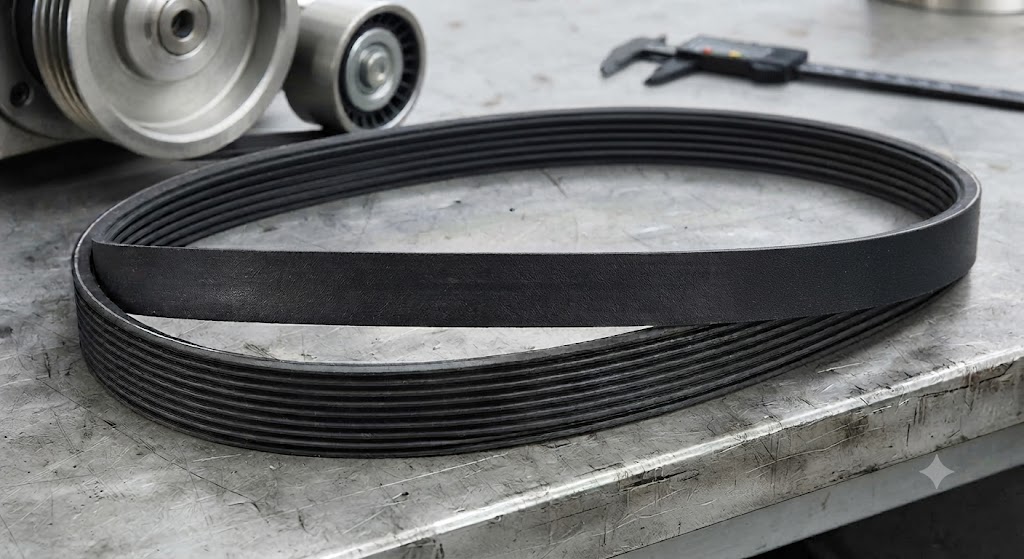
V-belts and Poly-V belts transfer power between shafts in many machines. They are built for regular use, but even a good-quality belt will eventually show signs of wear. Ignoring these signs can lead to slipping, poor machine performance, or an unexpected breakdown.
The good news is that belt failure can often be avoided. Signs like cracks, damaged ribs, unusual noises, glazing, and uneven wear may show that a belt needs attention. Regular inspections allow maintenance teams to catch these issues early, preventing disruptions in production.
Knowing when to replace a belt is therefore an important part of routine machine maintenance. It also helps ensure the drive system continues to operate with the right tension and power transmission.
What are the common signs that a v-belt needs replacement?
Check a Poly V-belt regularly for visible damage and performance changes. Some signs are easy to spot, while others become noticeable only when the machine is running.
Watch for the following:
- Cracks along the belt surface
- Frayed or damaged edges
- Cuts or splits in the material
- A shiny or glazed appearance
- Excessive stretching
- Changes in the original belt shape
Small cracks may not cause failure but can worsen with bending, leading to contact loss with the pulley. Inspect belts that are hard, brittle, or too soft due to age, heat, contamination, or improper conditions.
How can you tell when a poly-v belt is worn out?
A Poly-V belt has ribs running lengthwise that fit into pulley grooves to transmit power. Rib condition is crucial in inspections, and a belt may need replacing if ribs crack, separate, or wear unevenly.
| What you notice | What it could mean |
| Cracks between ribs | Ageing, heat, or repeated flexing |
| Worn rib edges | Poor pulley contact |
| Damaged or missing rib sections | Structural belt damage |
| Rib separation | Belt deterioration |
| Shiny ribs | Possible slipping |
| Uneven rib wear | Alignment or pulley issue |
| Deep cuts | Increased risk of failure |
Inspect the entire poly-v belt instead of just the visible part, as damage can develop on the side facing the pulley, which is harder to see.
Why does a poly-v belt drive start making noise?
Operators might hear squealing at start-up or under load, hinting at belt slipping. Still, noise alone doesn’t confirm a worn belt; inspect other drive parts.
Possible causes include:
- Incorrect belt tension
- Pulley misalignment
- Worn pulley grooves
- Excessive machine load
- Dirt or oil on the belt
- Incorrect belt size
- A worn belt
A poly-v belt drive requires proper contact between the belt and pulleys. Poor alignment or tension can cause noise and slipping.
Replacing the belt without identifying the root cause might not fix the issue. If symptoms come back after replacing it, check the entire poly-v belt drive.
Can improper belt tension decrease its lifespan?
Yes. Proper belt tension affects both performance and durability. If too loose, it can lead to slipping, increased friction, heat buildup, and wear. If too tight, it puts excessive stress on belts, bearings, shafts, and other drive components.
During routine maintenance, check for:
- Frequent slipping
- Excessive vibration
- A belt that appears too loose
- Signs of excessive tension
- Repeated need for tension adjustment
If a poly-v belt drive needs frequent adjustment, check more than belt tension. Pulley alignment, belt choice, and pulley condition may also need attention.
What happens if you keep running a damaged belt?
A damaged belt might keep working temporarily, but its performance declines over time. In busy production, this can cause broader problems.
Continued use of a badly worn belt may result in:
- Increased belt slipping
- Irregular power transmission
- Higher operating temperature
- Additional stress on drive components
- Reduced machine efficiency
- Unexpected belt failure
- Unplanned maintenance and downtime
Maintenance teams shouldn’t wait for a belt to snap; if inspections find serious damage, planned replacement is better. Properly maintained poly-v belt drive reduces avoidable disruptions.
How does pulley condition affect belt replacement?
Installing a new belt won’t fix a worn or damaged pulley. In fact, a poor pulley can shorten the life of a replacement belt.
Before fitting a new belt, inspect pulley grooves and surrounding parts for any issues.
- Worn grooves
- Rust or surface damage
- Dirt accumulation
- Incorrect alignment
- Signs of uneven belt contact
Pulley alignment is crucial because misaligned pulleys cause belts to run at an angle, leading to uneven edge wear. If the old belt failed early, check the pulley system before installing a new poly-v belt to prevent repeated failure.
How often should v-belts and poly-v belts be inspected?
No universal inspection period fits every belt application. A machine that operates for a few hours a day will experience different conditions from one that runs continuously.
The inspection schedule should consider:
- Daily operating hours
- Machine speed
- Drive load
- Operating temperature
- Dust and moisture
- Exposure to oil or chemicals
- Pulley condition
- Previous belt failures
Belts in demanding environments require frequent checks, and operators should inspect the drive if they notice sudden machine changes.
When should you replace a PK belt?
A PK belt is a Poly-V belt with multiple ribs for power transmission in compact drives. It should be replaced when showing excessive wear or damage.
When inspecting a PK belt, check the ribs carefully for:
- Cracking
- Rib wear
- Missing material
- Uneven surfaces
- Separation
- Glazing
The correct replacement must match the machine’s required specifications. A PK belt should not be selected only because it looks like the existing belt.
What should you check before buying a replacement?
Choosing the right replacement is as crucial as knowing when to replace the belt. A mismatched belt can wear out quickly or fail to transmit power properly.
Before placing an order, confirm:
- Belt type and profile
- Required dimensions
- Number of ribs
- Pulley specifications
- Machine speed
- Power requirement
- Operating temperature
For applications needing a PK belt, buyers should give accurate specs to suppliers. This helps find suitable replacements and reduces wrong orders.
Experienced poly-v belt manufacturers assist with belt selection for specific technical needs. Businesses can discuss dimensions, drive conditions, and usage with manufacturers before finalising their purchase.
How do you choose reliable poly-v belt suppliers?
The supplier you choose can affect how easily you find the right replacement. A reliable supplier should provide clear information about belt specifications and application suitability.
When comparing poly-v belt suppliers, consider whether they can provide:
- Different belt profiles and sizes
- Clear product specifications
- Application-related guidance
- Consistent product quality
- Support for industrial requirements
- Suitable options for replacement needs
Working with established poly-v belt suppliers simplifies repeat procurement for maintenance and purchasing teams. For businesses with multiple machines, access to suitable belts reduces delays for replacements.
Similarly, experienced poly-v belt manufacturers can help when standard belt requirements don’t fully match a particular application. The right technical discussion before purchase can prevent later selection errors.
Keep belt replacement part of preventive maintenance
V-belts and Poly-V belts rarely fail without any warning. Cracks, worn ribs, glazing, unusual noise, slipping, and uneven wear can provide useful clues about their condition. Watching for these signs lets maintenance teams plan replacements instead of dealing with an unexpected breakdown.
Maintenance teams should also consider pulley condition, belt tension, alignment, operating load, and the working environment. A new belt can only perform as expected when the surrounding drive system is in good condition.
Jigna Sales offers belt solutions tailored for various machinery and operational needs, supporting businesses in choosing the right products with its extensive range and industry expertise. Contact them to discuss your belt requirements.