
Packaging and material handling equipment needs accurate and consistent movement. Products may have to be conveyed, positioned, sorted, filled, sealed, or transferred at different stages of production. Any unwanted movement or timing loss can affect the process.
This is where timing belt applications become important. A timing belt uses toothed engagement between the belt and pulley to maintain synchronised movement. This makes it suitable for machines that require controlled motion and accurate positioning.
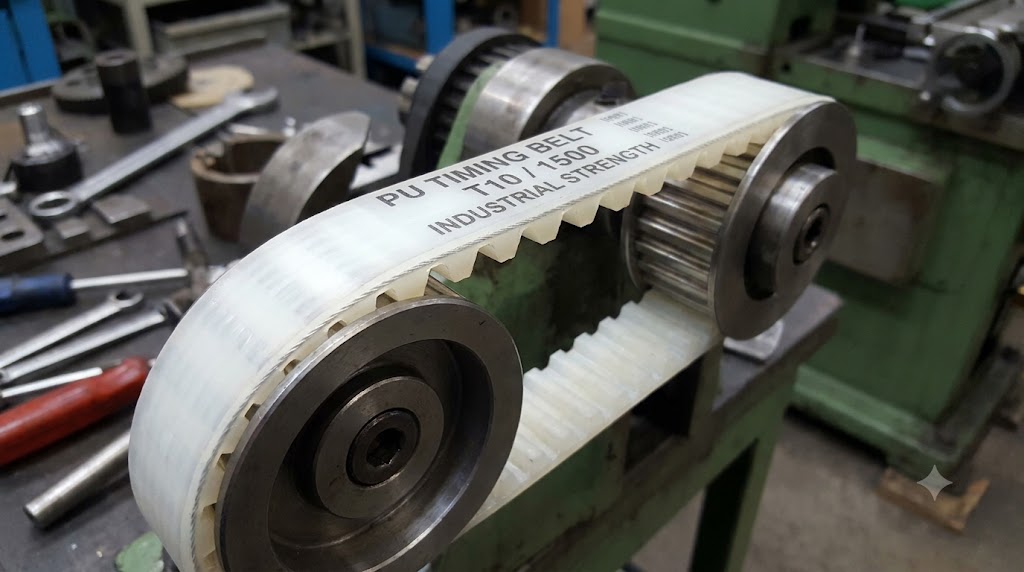
A PU timing belt is commonly used in packaging and material handling equipment because polyurethane belts can offer good wear resistance, flexibility, and dimensional stability. The right belt, however, depends on the machine design, load, speed, and operating environment.
Why are timing belts well-suited for packaging and material handling?
Packaging and material handling systems usually run continuously, so belts must move consistently while handling repeated loads. Unlike friction-driven belts, toothed timing belts grip the pulley, minimising slippage during operation.
Timing belts are effective when maintaining a consistent relationship between the driving and driven components is essential.
Common advantages include:
- Synchronous movement between machine components
- Consistent product positioning
- Controlled conveying speed
- Reliable power transmission
- Reduced risk of timing variation
- Availability in different sizes and tooth profiles
Understanding your specific needs and equipment requirements is essential before choosing the right belt, as benefits can vary depending on the application.
Where are timing belts used in packaging equipment?
Packaging machinery includes several processes, from moving packaging material to positioning products for filling, sealing, and labelling.
Some common timing belt applications in packaging equipment include:
| Packaging equipment | Typical belt function |
| Form-fill-seal machines | Moving film through different stages |
| Filling machines | Maintaining controlled product movement |
| Labelling machines | Positioning products accurately |
| Sealing equipment | Synchronising machine components |
| Packaging conveyors | Moving finished or semi-finished products |
| Sorting systems | Directing products between stages |
A PU timing belt is suitable for various applications needing controlled movement and appropriate surface features.
How do PU timing belts support material handling equipment?
Material handling systems move products, components, and packages from one point to another. Conveyors, transfer units, sorting equipment, and positioning systems all depend on controlled movement.
A PU timing belt can support both synchronous power transmission and linear movement. In conveyor systems, it can help maintain consistent product movement. In linear applications, the belt can move a component or carriage along a defined path.
Typical timing belt applications in material handling include:
- Conveyor systems
- Transfer units
- Sorting equipment
- Positioning systems
- Inclined conveyors
- Automated handling machines
- Product transfer lines
Select the belt specification based on load, speed, pulley size, belt length, and working environment.
Why is polyurethane used in timing belts?
Polyurethane is used in many industrial belts because it provides a combination of strength, flexibility, and wear resistance. These characteristics can be useful in machines that operate for long periods with repeated movement.
A PU timing belt may also be available with different tension members and surface options. This allows you to select the belt to meet the requirements of a particular machine.
Important factors include:
- Tensile strength
- Abrasion resistance
- Flexibility
- Dimensional stability
- Resistance to oils and greases
- Operating temperature
- Surface grip
A polyurethane belt’s actual performance depends on its construction and how well it matches the application.
PU timing belt vs rubber timing belt: what is the difference?
Both polyurethane and rubber belts are used for synchronous power transmission. The choice between a PU timing belt and a rubber timing belt should be based on the operating conditions rather than material preference alone.
| Factor | PU Timing Belt | Rubber Timing Belt |
| Base material | Polyurethane | Rubber-based construction |
| Common uses | Packaging, conveying, linear movement and synchronous drives | Synchronous power transmission and various industrial drives |
| Surface options | Can be configured for transport applications | Available in different constructions and coverings |
| Selection factors | Load, speed, environment and machine design | Load, speed, temperature and machine design |
A rubber timing belt may suit many conventional synchronous drive applications. A PU timing belt can be considered where the belt’s material, surface, and construction suit the equipment.
What should you check before selecting a timing belt?
Selecting a timing belt based only on length or width can lead to problems. Consider the full operating conditions before placing an order.
Check these factors:
- Tooth profile and pitch: The belt must match the pulley profile.
- Length and width: These should suit the machine design.
- Operating speed: The belt should suit the required speed.
- Load: Consider both regular and peak loads.
- Pulley diameter: Pulley dimensions can affect belt performance and service life.
- Operating environment: Temperature, moisture, dust, oils, and cleaning conditions can affect belt selection.
- Surface requirement: Conveying applications may need a specific coating or surface profile.
For specialised timing belt applications, these factors become even more important because the belt may perform both conveying and synchronisation functions.
How does proper belt selection affect machine performance?
A correctly selected timing belt helps maintain the intended movement between connected machine components. This is especially important when products must remain at a fixed distance from each other or reach a specific position at a specific time.
In packaging and material handling equipment, suitable belt selection can support:
- Consistent product movement
- Accurate positioning
- Smooth operation
- Reliable power transmission
- Better control over machine movement
- Fewer belt-related interruptions
However, belt selection is only one part of proper operation. Alignment, tension, pulley condition, installation, and regular inspection also influence belt performance.
How can businesses choose the right timing belt supplier?
The right supplier can make belt selection easier, particularly when the equipment has specific operating requirements. Businesses should provide details such as belt dimensions, pulley specifications, application type, operating speed, and load.
For businesses searching for timing belt dealers in Mumbai, it helps to choose a supplier that understands the application rather than simply providing a belt based on dimensions. This becomes particularly important for specialised timing belt applications in automated packaging and handling machinery.
A supplier should be able to help identify whether a PU, rubber timing belt, or another belt construction is appropriate for the equipment.
Making the right belt choice for your equipment
The right belt can make a difference in how packaging and material handling equipment performs during regular operation. Consider factors such as load, speed, pulley size, working conditions, and required movement before selecting a timing belt. A PU timing belt may suit applications that require polyurethane construction, while a rubber timing belt may suit other synchronous drive requirements.
For businesses exploring timing belt manufacturers india, Jigna Sales Corporation provides industrial belt solutions for different machinery and operating requirements. Its range of timing belts can help businesses find an option suited to their specific equipment and application.
Need help choosing the right belt? Contact Jigna Sales Corporation to discuss your requirements.