
A small timing belt can cause massive damage if it fails. Here’s what really happens when it breaks, how much repairs can cost, and how choosing the right PU timing belt or rubber timing belt can save you from unexpected breakdowns.
A timing belt is one of those parts people rarely think about. It is hidden. It is quiet. And most of the time, it does its job perfectly.
But when a timing belt breaks, the situation changes instantly.
The engine can stop. A machine can shut down. Repair costs can shoot up fast.
Let’s break this down in simple words. What really happens when a timing belt fails? How serious is the damage? And how can you avoid heavy repair bills?
First, What Does a Timing Belt Actually Do?
A timing belt keeps engine or machine parts moving in sync.
In vehicles, it connects the crankshaft and camshaft. This ensures that valves open and close at the right time.
In industrial machinery, it helps transfer motion accurately between shafts. That accuracy keeps production smooth and consistent.
If the belt loses timing, even slightly, problems begin.
Common types include:
a) Rubber timing belt – widely used in automotive engines
b) PU timing belt – stronger, more durable, commonly used in industrial applications
Both are effective when chosen correctly and maintained on time.
So What Happens When a Timing Belt Breaks?
This is where things get serious.
Immediate Effect
When a timing belt snaps:
a) The engine stops instantly
b) The vehicle may stall while driving
c) Industrial machines shut down without warning
d) Production may come to a sudden halt
There is usually no slow warning phase. It can feel very sudden.
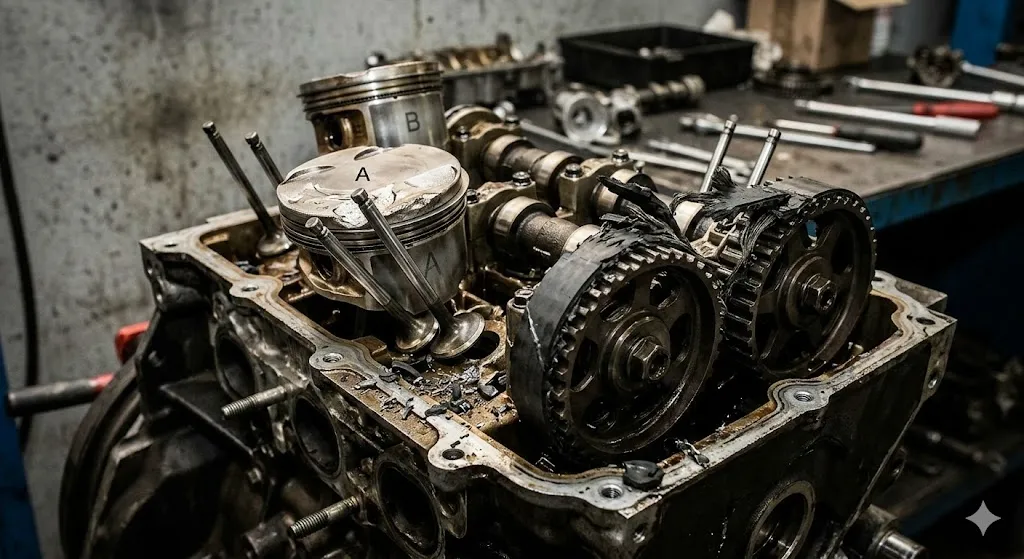
Internal Engine Damage
In many engines, especially interference engines, a broken timing belt can cause:
a) Pistons hitting valves
b) Bent valves
c) Cracked cylinder heads
d) Internal engine damage
This turns a simple maintenance task into a major repair job.
In industrial systems, failure may lead to:
a) Loss of synchronisation
b) Component misalignment
c) Product defects
d) Unexpected downtime
The damage depends on the system, but the risk is always high.
How Expensive Can It Get?
Let’s compare two situations clearly.
If You Replace the Timing Belt on Time
You usually pay for:
a) The belt itself
b) Labour charges
c) Possibly a tensioner or pulley
This is planned maintenance. The cost is manageable.
If the Timing Belt Breaks
You may face:
a) Engine disassembly
b) Valve replacement
c) Piston repair
d) Head work
e) Long labour hours
Here is a simple comparison:
| Scenario | Cost Level | Risk Level |
| Scheduled timing belt replacement | Moderate | Low |
| Timing belt breakage | High to Very High | Severe |
In factories, downtime alone can cost more than the belt itself.
That is why prevention always makes financial sense.
Can You Spot Timing Belt Problems Early?
Sometimes yes. Sometimes no.
Possible Warning Signs
You might notice:
a) Ticking sounds from the engine
b) Rough idling
c) Difficulty starting
d) Engine misfires
fVisible cracks on the belt
In industrial setups, look for:
a) Tooth wear
b) Cracks
c) Belt stretching
d) Improper tension
However, timing belts can fail without clear warning. That is why manufacturers recommend replacement at specific intervals.
Regular inspection reduces risk significantly.
Rubber Timing Belt or PU Timing Belt: Which Is Better?
Both have their place.
Here is a simple comparison.
| Feature | Rubber Timing Belt | PU Timing Belt |
| Common Use | Automotive engines | Industrial machinery |
| Flexibility | High | Moderate |
| Wear Resistance | Good | Excellent |
| Precision | Good | Very High |
| Heavy-duty suitability | Limited | Strong |
A rubber timing belt works well for vehicles and lighter applications.
A PU timing belt is tougher. It handles higher loads, offers better durability, and performs well in demanding industrial environments.
Choosing the wrong type can increase failure risk. Choosing the right one improves performance and lifespan.
How Do You Choose the Right Timing Belt Dealers in Mumbai?
If you are searching for timing belt dealers in Mumbai, price should not be the only factor.
Look for dealers who:
a) Offer proper sizing guidance
b) Understand load and speed requirements
c) Provide both PU timing belt and rubber timing belt options
d) Have real experience in industrial applications
A knowledgeable dealer will ask questions about your system before suggesting a product.
That advice can prevent costly mistakes.
Prevention Is Always Cheaper Than Repair
A broken timing belt is not a small problem. It can stop your vehicle in the middle of traffic or shut down your entire production line. The damage can go far beyond the cost of the belt itself.
Regular inspection, timely replacement, and choosing the right rubber timing belt or PU timing belt can save you from heavy repair bills.
At Jigna Sales, we understand how critical timing belts are for smooth operations. With decades of industry experience as an industrial belts manufacturer, we supply high-quality PU timing belts and reliable belt solutions designed for durability and precision. As trusted timing belt dealers in Mumbai, we guide our customers in selecting the right belt for their specific application — whether it is automotive, industrial, or heavy-duty machinery.
We focus on quality, correct sizing, and long-term performance because we know that one belt failure can mean serious downtime. If you need expert advice or a dependable timing belt solution, get in touch with us. We are here to help you prevent costly breakdowns before they happen.

