
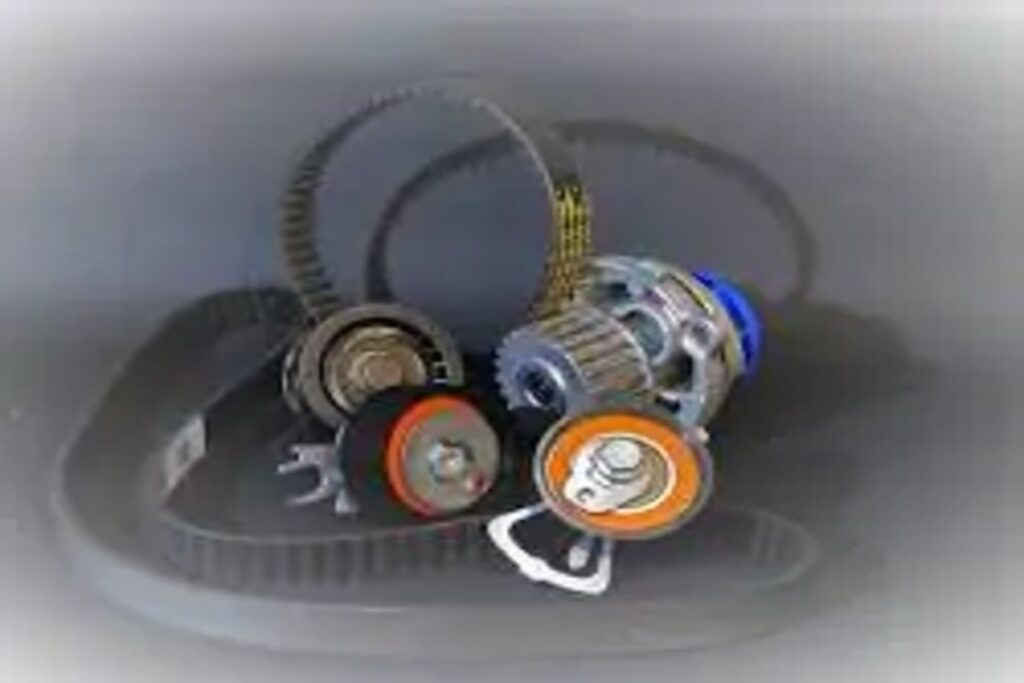
Timing belts are toothed belts that provide precise, synchronized power transmission in automotive and industrial applications. This article covers their design, tooth profiles, materials, types, applications, benefits, common causes of timing belt failure, and key factors to consider when selecting the right belt.
Key Takeaways
- Timing belts provide precise, slip-free power transmission.
- Different tooth profiles, materials, and belt types suit different applications.
- Proper belt selection depends on torque, pulley size, pitch, strength, and belt width.
- Understanding common timing belt failure causes can help support reliable belt performance.
What are Timing Belts?
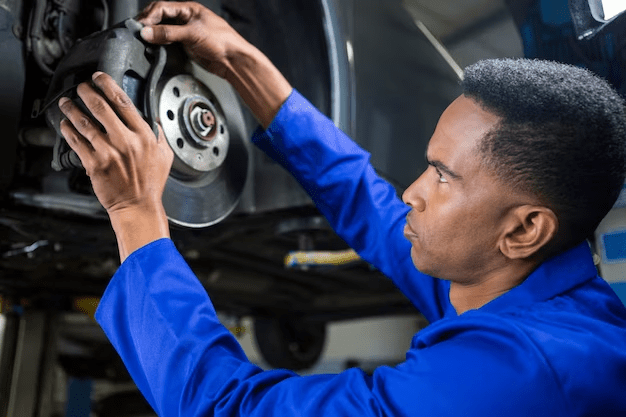
Timing belts, also known as cambelts, synchronize the rotation of the camshaft and crankshaft in internal combustion engines. This synchronization allows valves and pistons to operate in the correct sequence.
They are also used in industrial timing belts systems where accurate and consistent power transmission is required.
Related article: WHAT IS A TIMING BELT AND WHAT IS IT USED FOR?
Design of Timing Belts ( Timing Belt Teeth, Timing Belt Tooth Profiles, )
Timing belts consist of two primary components: Timing belts consist of molded cords that carry the torque load and a compound that forms the teeth and covers the cords. The materials used can vary depending on the application and performance requirements.
Timing Belt Teeth
Reliable timing belt teeth play a crucial role in maintaining synchronization between the crank and camshafts.
The teeth of a timing belt maintain synchronization with the pulley. Different metric pitches are available, with pitch referring to the distance between the centers of adjacent teeth.
Timing Belt Tooth Profiles
- Trapezoidal belt tooth
Trapezoidal belt teeth are widely used in industrial applications such as linear positioning and conveying. They provide good force transmission and low backlash.
- Curvilinear belt tooth
Curvilinear belt teeth help reduce stress concentrations and improve torque and speed capabilities. Their smoother engagement can also provide quieter operation.
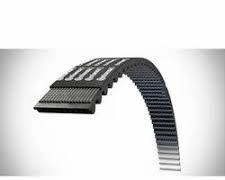
- Modified curvilinear tooth
Modified curvilinear teeth further refine this design with a smaller tooth depth and greater flank angle, supporting high torque and force transmission.
Stages in Designing a Timing Belt
Designing a timing belt involves determining the peak torque, selecting suitable pulley diameters, choosing the tooth profile and pitch, and calculating the teeth in mesh.
The belt pitch length, effective tension, required break strength, reinforcement type, and belt width must also be considered. The final belt should be capable of handling the design torque and requirements of the application.
Timing Belts Construction Material ( Rubber in Timing Belts, Polyurethane Material, Fabric Belts, )
The material of a timing belt should match the operating conditions of the application.
Polyurethane timing belts offer resistance to high temperatures and oil while providing durability and energy-efficient performance.
Fabric belts can provide high tensile strength, low friction, and resistance to temperature variations, making them suitable for applications requiring high performance and acceleration.
Rubber timing belts are widely used across different industries. Modern rubber formulations can provide improved temperature resistance, durability, and resistance to distortion.
The function of Timing Belts
The primary function of a timing belt is to maintain accurate synchronization while transmitting power. In automotive engines, it synchronizes the camshaft with the crankshaft to ensure the proper opening and closing of valves.
Tming belts also provide slip-free engagement and operate without lubrication, making them suitable for various applications.
Types of Timing Belts and Their Failure
Open-Ended Timing Belts
Open-ended timing belts can convert synchronous rotary motion into linear motion. They are used in applications such as conveying, indexing, automation, and packaging.
Spliced nd Welded Timing Belts
These timing belts are suitable for general-purpose conveying applications. They are produced by heat-welding open roll stock to create the required belt length.
Truly Endless Timing Belts
Truly endless timing belts have no seams or splices, providing balanced and smooth operation. They can help reduce vibration and strain and are used in material transportation and other applications.
Symptoms of a Failing Timing Belt
A failing timing belt may cause an engine to fail to start. Sluggish acceleration, unusual rattling, or timing belt slippage at higher RPMs may also indicate belt deterioration or missing teeth.
Applications and Advantages of Timing Belts
Timing belts are used in automotive systems and equipment such as treadmills, as well as industrial applications requiring synchronized movement and power transmission.
Their key advantages include precise timing, high torque capability, slip-free operation, low vibration, quiet operation, high mechanical efficiency, reduced maintenance, and resistance to abrasion and chemicals.
Considerations When Choosing a Timing Belt
When selecting a timing belt, consider the required torque, pulley diameter, tooth profile, pitch, belt length, strength, and belt width. Choosing the appropriate combination of these factors helps ensure reliable performance for the intended application.
Rubber Timing Belts From Jigna Sales
For applications requiring rubber construction, Jigna Sales is one of the best timing belts manufacturers in India, offering Rubber Timing Belts for industrial power transmission requirements. The appropriate belt should be selected according to the application’s operating conditions and performance needs.
FAQ
What is a timing belt and how does it work?
A timing belt is a toothed belt that synchronizes rotating components while transmitting power without slipping.
What are the different types of timing belts?
The main timing belt types include open-ended, spliced and welded, and truly endless timing belts.
What materials are timing belts made from?
Timing belts can be made from polyurethane, rubber, and fabric, depending on the application and performance requirements.
What causes timing belt failure?
Timing belts utilize a variety of materials, each with unique specifications tailored to specific circumstances. As mentioned earlier, these materials encompass urethane, neoprene, rubber, fabric, and more.
How do I choose the right timing belt?
Choosing the right timing belt involves considering torque, pulley size, tooth profile, pitch, belt length, strength, and belt width. For applications requiring rubber construction, Rubber Timing Belts can be considered based on the operating requirements.