Industrial machinery depends on precise movement and steady power transmission. Components must maintain speed, position, and motion to prevent disruptions that compromise product quality and slow production.
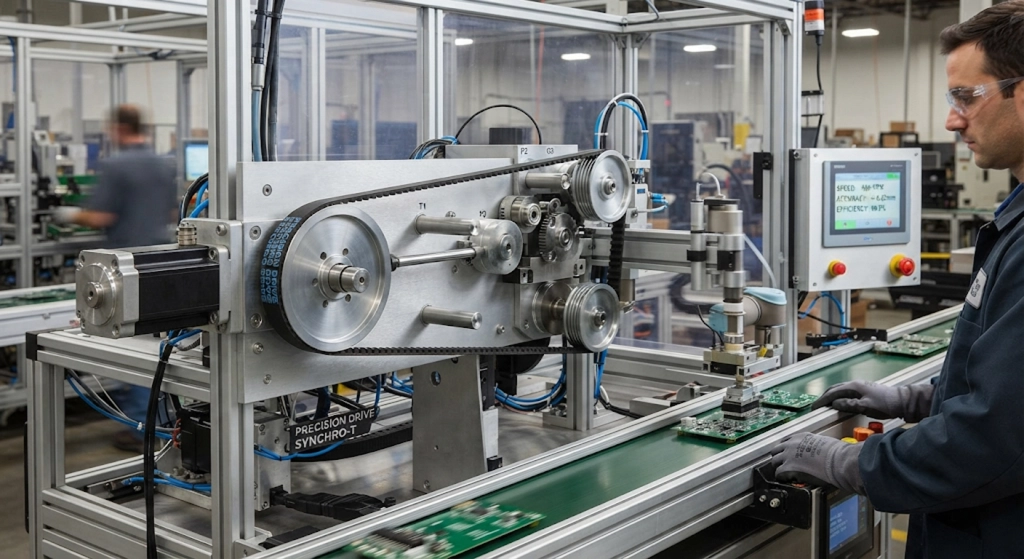
Industrial timing belts play an important role. They transfer power between rotating shafts while maintaining synchronised movement. Their toothed design prevents slippage and supports accurate machine operation.
Choosing the right belt depends on machine speed, load, operating conditions, and pulley design. Understanding timing belts helps businesses select suitable components and control industrial processes.
How do timing belts maintain precision in industrial machinery?
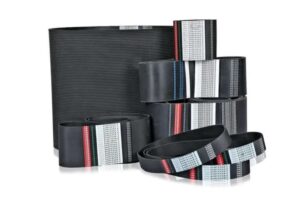
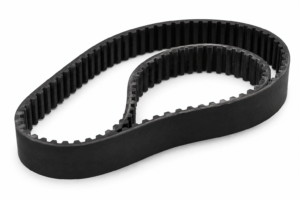
A timing belt has evenly spaced teeth on its inner surface. These teeth mesh with matching grooves on a timing pulley. Unlike friction-based belt drives, this arrangement transmits motion through direct tooth engagement.
This helps maintain a consistent relationship between the driving and driven shafts. It is especially useful in machines where different components must move at specific intervals.
Some ways timing belts support precision include:
- Maintain synchronised movement between machine components.
- Reduce the risk of belt slipping during normal operation.
- Support accurate positioning in automated machinery.
- Maintain consistent speed ratios between connected shafts.
- Help coordinate repeated machine movements.
These features make industrial timing belts suitable for machinery that requires controlled and repeatable movement.
Which industrial applications benefit from timing belts?
Timing belts serve industries requiring precise motion and reliable power transmission; their use depends on machine design and synchronization needs.
Some common applications include:
| Industry | Application of Timing Belts |
| Packaging | Synchronising filling, sealing, and labelling operations |
| Printing | Maintaining consistent movement of rollers and printing components |
| Textile | Coordinating the movement of different machine parts |
| Automotive | Supporting synchronised movement in selected engine and assembly systems |
| Food processing | Driving machinery used for processing and packaging |
| Manufacturing | Controlling movement in automated production equipment |
In these industries, industrial timing belts help maintain consistent machine operation. They are particularly useful when multiple components need to work together without unwanted changes in timing.
How do timing belts improve industrial efficiency?
Machine efficiency depends on more than production speed. Consistent operation, reduced interruptions, and proper power transmission also influence overall productivity.
A correctly selected timing belt can improve efficiency in several ways.
1. Reduces power transmission losses
The toothed engagement between the belt and pulley helps transfer motion without relying on friction alone. This supports efficient power transmission when the drive is correctly designed.
2. Maintains consistent machine speed
Timing belts help maintain the intended speed relationship between connected shafts. This is useful in machines where different operations must remain coordinated.
3. Reduces unplanned interruptions
A suitable belt with proper installation and maintenance can support reliable operation. Regular inspection also helps identify wear before it affects machine performance.
4. Supports automated operations
Automated machinery often requires repeated and controlled movements. Timing belts help maintain these movements, reducing the need for frequent manual adjustments.
5. Simplifies drive maintenance
Timing belt systems generally do not require lubrication for belt-to-pulley contact. This can simplify routine maintenance compared with certain other mechanical drive arrangements.
What is the difference between timing belts and industrial v-belts?
Both timing belts and V-belts transfer power in industrial machinery, but they work differently. The choice depends on whether the machine needs synchronised movement or friction-based power transmission.
| Comparison factor | Timing Belts | V-Belts |
| Working principle | Toothed engagement with pulleys | Friction between belt sides and pulley grooves |
| Main purpose | Synchronised power transmission | General power transmission |
| Slippage | Designed to prevent slipping under correct operating conditions | Can slip when friction or tension is insufficient |
| Common applications | Printing, packaging and automated machinery | Pumps, fans, compressors and industrial drives |
| Pulley type | Toothed timing pulleys | V-grooved pulleys |
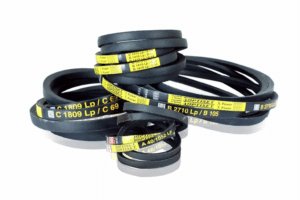
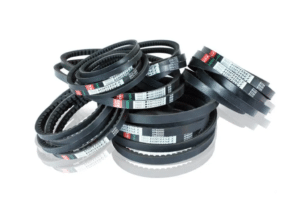
Industrial V belts are suitable for applications where general power transmission is required. They are commonly used in machinery such as pumps, compressors, and ventilation systems.
On the other hand, timing belts are preferred when maintaining the correct relationship between rotating components is important. Both industrial V belts and timing belts have their own applications, and one should not replace the other without checking the pulley arrangement and drive requirements.
What factors should be considered when selecting industrial timing belts?
Selecting a belt based only on its dimensions can lead to performance problems. The belt must match the machine’s operating requirements and pulley arrangement.
Before choosing a belt, consider the following factors:
- Belt profile and pitch: The teeth must match the pulley grooves to ensure proper engagement.
- Belt length and width: These dimensions should suit the machine’s design and required load.
- Operating speed: The belt must support the machine’s running speed.
- Load capacity: Consider both regular operating loads and sudden load changes.
- Operating temperature: The belt material should suit the surrounding temperature.
- Pulley alignment: Incorrect alignment can cause uneven wear and tracking problems.
- Belt tension: Incorrect tension can affect performance and reduce service life.
These factors also help businesses identify suitable industrial timing belts for different machinery requirements.
Why is choosing the right belt manufacturer important?
The quality and specifications of a belt can directly affect machine performance. Businesses should consider the manufacturer’s product range, material options, belt profiles, and ability to meet specific industrial requirements.
When comparing timing belt manufacturers in India, buyers should check whether the available belts match their machinery specifications. Important considerations include:
- Availability of suitable belt profiles and dimensions.
- Material quality and reinforcement options.
- Consistency in product specifications.
- Suitability for the intended industrial application.
- Technical assistance with belt selection.
Businesses looking for rubber timing belt manufacturers in India should also check the belt’s construction, tensile strength, and compatibility with the existing pulley system.
Working with experienced timing belt manufacturers in India can make it easier to identify suitable products for different machinery. Similarly, evaluating rubber timing belt manufacturers in India based on product quality and application requirements can help businesses make informed purchasing decisions.
Improving machine performance with the right timing belt
Precision and efficiency are important for maintaining consistent industrial production. A correctly selected timing belt helps synchronise machine components, maintain controlled movement, and support reliable power transmission. However, proper installation, alignment, and regular inspection are equally important for long-term performance.
Businesses should select belts according to their machinery, operating conditions, and power transmission requirements. Whether the application needs timing belts or industrial V belts, the right specifications can make a difference to machine operation.
Jigna Sales Corporation offers industrial belt solutions, including timing belts and V-belts, for different industrial applications. Businesses exploring rubber timing belt manufacturers in India can explore its product range to find suitable options for their machinery.
Get in touch with Jigna Sales Corporation to discuss your industrial belt requirements.