
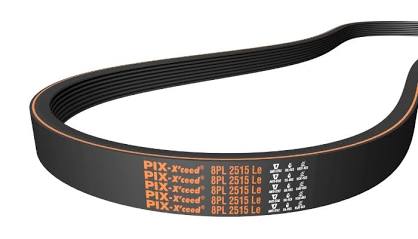
When a production machine stops because of a worn or damaged belt, finding a replacement quickly becomes important. But replacing a belt should not mean choosing the first product available. The belt needs to match the machine, and the supplier needs to be capable of providing the same quality when another replacement is needed.
This is why supplier selection deserves attention. Industrial buyers have to consider more than the quoted price. Product specifications, manufacturing standards, availability, delivery schedules, and technical assistance can all affect the buying decision.
If your business purchases belts regularly, comparing poly v belt suppliers on these practical factors can make future procurement easier.
What data needs to be gathered prior to supplier comparison?
A supplier comparison is more useful when you give all suppliers the same requirements. Start by collecting details of the belt currently in use and the machine it operates.
Depending on the equipment, you may need:
- Belt dimensions and length
- Rib count and profile
- Pulley specifications
- Motor speed
- Power requirement
- Machine type
- Operating hours
- Temperature and surrounding conditions
The old belt may also carry identification markings that can help with product matching. However, these markings should be checked against the machine and manufacturer specifications where possible.
Having this information ready prevents vague enquiries and allows suppliers to respond to the same technical requirement.
How can you assess the construction and quality of a poly V belt?
A poly v belt needs to maintain proper contact with the pulley while transmitting power during operation. Its construction therefore matters just as much as its stated size.
Instead of relying only on a supplier’s quality claims, ask for specific product information. Find out what materials are used, whether dimensions are checked, and how finished belts are inspected.
Compare suppliers using factors such as:
| Area to Compare | What to Look For |
| Belt dimensions | Correct length and profile |
| Rib formation | Uniformity across the belt |
| Material | Suitability for the operating environment |
| Belt construction | Consistent build and finish |
| Inspection | Checks before the product is dispatched |
| Product information | Clear technical specifications |
The goal isn’t to choose a supplier based on how many claims it makes. It is to understand whether the supplier has a defined process for producing the product.
What does the manufacturer’s quality process tell you?
If belts are going to be purchased repeatedly, manufacturing consistency becomes important. The belt supplied six months from now should continue to meet the required specification.
When assessing poly v belt manufacturers, ask how product specifications are maintained during production. It is also worth asking whether finished products are inspected before they leave the facility.
A useful supplier discussion can cover:
- How product dimensions are controlled
- What inspections are performed
- How production specifications are recorded
- Whether repeat batches follow the same specifications
- How non-conforming products are handled
These questions can help buyers understand the supplier’s approach to quality instead of judging the product only from its appearance.
How do you verify if a supplier can consistently provide supplies?
A belt may be suitable for your machine, but that does not guarantee easy availability when you need another one.
This matters for factories, workshops, OEMs, and maintenance teams that use the same belts regularly. A shortage at the time of replacement can result in unnecessary waiting or emergency sourcing.
When comparing poly v belt suppliers, ask about their ability to handle both current and future requirements.
Check:
- Typical lead time
- Available belt sizes and profiles
- Stock position, where applicable
- Production capacity
- Bulk order handling
- Repeat-order arrangements
- Delivery locations
Do not assume that a supplier with a large product catalogue can automatically handle your required volumes. Ask for information that relates specifically to your purchasing pattern.
Why is application knowledge important when selecting a supplier?
The belt does not work independently. It forms part of a complete power transmission arrangement, and the operating conditions can influence its selection.
A poly v belt drive may operate at different speeds and loads depending on the machinery. The belt may also be exposed to heat, dust, oil, moisture, or long operating cycles.
A supplier should therefore be able to understand the application before recommending a product.
For example, a belt running for several hours each day in industrial equipment may need different consideration from one used for occasional operation. Sharing these details with the supplier gives them a better basis for discussing the appropriate belt.
Is the lowest belt price always the best deal?
A low quotation can be attractive, particularly when purchasing in larger quantities. However, the purchase price does not show the complete cost of using a belt.
If a belt needs replacement sooner than expected, the business may also have to account for maintenance labour, machine stoppage, urgent purchasing, and production delays.
A broader supplier comparison can include:
| Cost or Service Factor | What It Helps You Understand |
| Belt price | Initial purchasing expense |
| Expected operating performance | Potential replacement frequency |
| Delivery time | Possible maintenance delays |
| Product consistency | Ease of future replacement |
| Technical assistance | Support during product selection |
| Supply capacity | Ability to meet recurring demand |
This does not mean a higher-priced belt is automatically better. Buyers should compare the actual product specifications and supplier capabilities before making a decision.
Questions to consider before making a bulk purchase
A short technical discussion can reveal whether a supplier is prepared to handle your requirements.
Before placing a bulk order, ask:
- Which belt specification suits the application?
- What technical details can be provided for the product?
- What checks are carried out before dispatch?
- Can you supply the same specification for future purchases?
- What quantity can normally be supplied?
- What is the expected delivery period?
For a supplier that is new to your business, a smaller initial order can be a practical way to check the product and service. Buyers can verify the fit, finish, packaging, documentation, and delivery process before increasing order quantities.
How can you make repeat purchases more consistent?
Once a belt has been approved for a particular machine, record its details instead of relying on memory during the next purchase.
Keep information such as:
- Belt specification
- Machine name or application
- Previous quantity ordered
- Purchase date
- Supplier details
- Replacement history
These records give the procurement team a clear reference for future orders.
A dependable poly v belt supplier should also be able to work from the established specification. This reduces the possibility of receiving a different product simply because the next order was placed by another member of the purchasing team.
What should a long-term poly V belt supplier offer?
A useful supplier relationship is built around more than one successful delivery. For regular industrial requirements, the supplier should be able to provide suitable products, communicate clearly, and support repeat purchasing.
Look for a supplier that can demonstrate:
- Clear product specifications
- Consistent manufacturing practices
- Suitable product options
- Practical delivery commitments
- Capacity for repeat requirements
- Application-related assistance
These factors become increasingly important when belts are used across several machines or production locations.
Selecting a supplier for reliable belt procurement
Choosing between poly v belt suppliers requires a practical comparison of the product and the supply process. Buyers should check how the belt is made, whether its specifications remain consistent, how well the supplier understands the application, and whether regular orders can be supported.
For businesses sourcing industrial v belts, it is also important to consider product suitability, consistent specifications, and the supplier’s ability to meet future replacement requirements. A clear technical discussion and a proper comparison can help businesses avoid making the decision on price alone.
Jigna Sales Corporation supplies poly belts for industrial power transmission applications. Its range can be considered by businesses looking for belts suited to their machinery and ongoing procurement requirements.
Explore Jigna Sales Corporation’s poly belt range for your industrial belt requirement.