
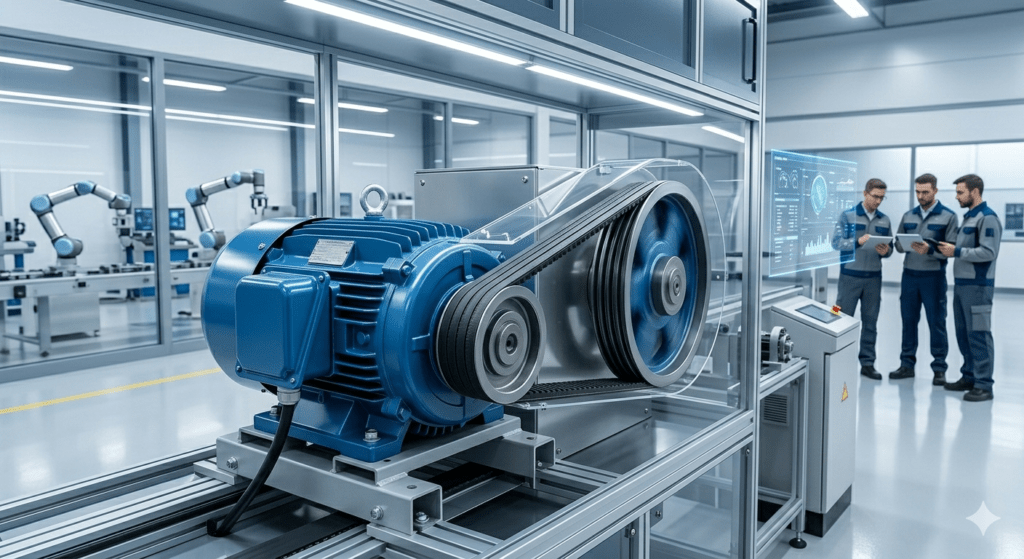
Heavy machinery often faces efficiency loss due to poor power transmission systems. Industrial V-belts help solve this by ensuring smooth and reliable performance.
Industrial machines require stable, efficient power transmission to operate smoothly in demanding environments. Even a small imbalance in energy flow can impact production speed and output quality. This is why reliable mechanical components play a major role in manufacturing systems.
Modern industries focus on reducing downtime and improving operational consistency. Machines must perform under continuous load without frequent interruptions. A strong transmission system helps achieve this balance in daily operations.
In this blog, we explore the role of industrial V-belt systems in improving efficiency across heavy machinery and manufacturing plants.
What is an Industrial V-Belt?
An industrial V-belt is a mechanical component used to transfer power between rotating shafts. It works through friction and ensures smooth energy movement in machines. This makes it a key part of industrial transmission systems.
It is widely used because of its simple structure and strong performance under load. It can handle continuous operation without major performance loss. This makes it suitable for various industrial applications.
Key features:
- Strong grip for effective power transfer
- Flexible structure for smooth pulley movement
- High durability under heavy load conditions
- Reliable performance in continuous operations
These characteristics make it an essential part of modern machinery systems. Industries prefer it for stable and long-term use. It supports efficiency in multiple production environments.
Importance of Manufacturing Efficiency
A well-functioning transmission system directly improves production efficiency. Machines perform better when energy loss is minimised. This is where belt systems contribute significantly.
The use of industrial Vee-belts ensures stable performance in continuous operations. They help reduce mechanical stress on machines. This leads to better productivity in manufacturing plants.
- Maintains uninterrupted production flow
- Reduces energy wastage during operation
- Supports heavy load handling in machines
- Improves machine stability and output quality
- Reduces breakdown frequency in systems
These benefits make belt systems essential in industrial setups. They support long-term operational efficiency. This results in smoother and more reliable production cycles.
How Industrial V-Belts Work in Machinery
Industrial systems depend on smooth energy transfer for continuous performance. Belt-driven systems play a key role in maintaining this flow. Their working mechanism is simple yet highly effective.
Step 1: The motor generates rotational energy
Step 2: Energy moves toward the pulley system
Step 3: The belt creates a friction-based grip
Step 4: Power is transferred to connected machinery
Step 5: Continuous output is maintained
This process ensures stable machine operation without interruption. It also reduces mechanical stress on components. Overall system efficiency improves significantly.
The simplicity of this mechanism makes it highly reliable. It performs well even under heavy industrial use. This is why it is widely adopted across manufacturing units.
Benefits Over Traditional Transmission Systems
Different transmission systems are used in industries depending on requirements. However, belt-based systems offer a balanced mix of cost and performance. This makes them highly practical for modern setups.
When compared with other systems, industrial belt manufacturers in India offer greater flexibility. They are easier to maintain and replace. This reduces long-term operational costs.
| Feature | V-Belts | Chain Systems | Gear Systems |
| Noise Level | Quiet operation | High noise during use | Moderate noise |
| Maintenance | Low maintenance | Frequent lubrication needed | High precision maintenance required |
| Installation | Easy setup | Moderate complexity | Complex installation |
| Cost Efficiency | Cost-effective | Higher long-term cost | High initial and repair cost |
| Performance | Smooth power transfer | Slight vibration | Highly precise but rigid |
| Flexibility | High flexibility for loads | Limited flexibility | Low flexibility |
These advantages make belt systems a preferred choice in industries. They offer practical efficiency without complex maintenance. This improves overall system reliability.
Applications in Heavy Machinery and Plants
Belt systems are used in a wide range of industrial machines. Their flexibility makes them suitable for multiple applications. This helps industries maintain smooth operations.
The industrial v-belt is commonly found in both heavy and light-duty systems. It supports continuous production processes. This makes it a core part of industrial setups.
1) Manufacturing equipment
Conveyor systems for material movement
Packaging machines in production lines
2) Heavy industrial machines
Crushers for material processing
Mixers for industrial blending
3) Plant utility systems
Pumps for fluid handling
Ventilation systems for air control
These applications show their wide industrial importance. It supports multiple functions across different sectors. This improves overall production efficiency.
Choosing the Right Suppliers and Manufacturers
Selecting the right supplier plays an important role in machine performance. Quality components ensure long-term efficiency and reduced downtime. This makes supplier selection a critical decision.
Reliable industrial vee-belts depend on proper manufacturing standards. Strong quality control ensures better durability. This improves operational stability in industries.
Key considerations:
- High-quality raw materials
- Precision manufacturing process
- Industry experience and trust
- Reliable delivery and support system
Good suppliers help maintain consistent machine performance. They reduce risks of breakdown and inefficiency. This leads to better long-term industrial output.
Improving Output with Advanced Transmission Support
Industrial operations depend on systems that ensure smooth and continuous performance. Belt-driven mechanisms play a key role in maintaining this stability across different types of machinery. They help industries achieve better productivity with fewer interruptions.
Jigna Sales focuses on providing reliable industrial transmission solutions that support long-term performance. We understand the importance of durability and efficiency in heavy machinery applications. Our solutions are designed to meet real industrial demands with consistent quality and dependable output.
Choosing the right components can significantly improve machine efficiency and reduce downtime in the long run. Connect with us today to explore the right industrial solutions for your machinery needs and receive expert support to improve performance.