Choosing a reliable industrial belt manufacturer in India requires evaluating product quality, technical specifications, manufacturing experience, quality control processes, supply capabilities and technical support. Businesses should also consider minimum order quantities, product availability, delivery timelines and long-term maintenance costs before selecting a manufacturing or supply partner.
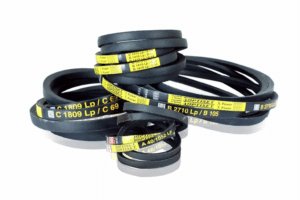
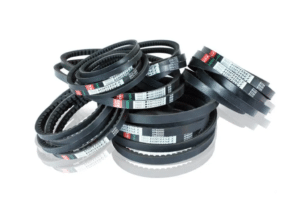
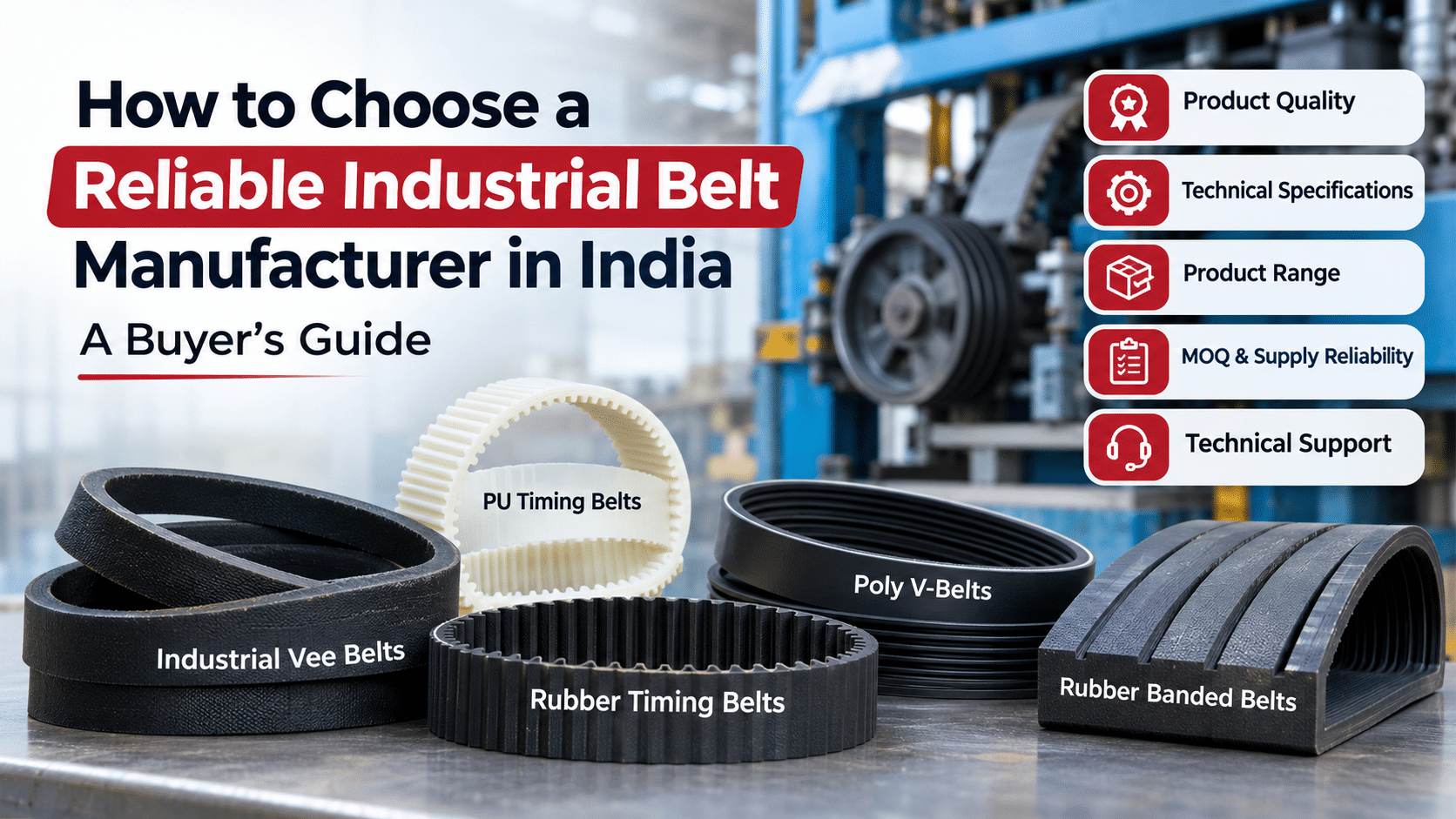
Established in 1972, Jigna Sales Corporation is a Mumbai-based manufacturer, supplier, distributor and exporter of industrial belts. With over five decades of industry experience, the company offers industrial V-belts, rubber timing belts, PU timing belts, cogged belts, rubber banded belts and Poly V-belts for various industrial applications.
This guide explains how businesses can evaluate industrial belt manufacturers, compare product specifications and select a reliable procurement partner for their machinery requirements.
What Should You Look for in an Industrial Belt Manufacturer?
A reliable industrial belt manufacturer should offer consistent product quality, detailed technical specifications, a diverse product range, dependable supply and technical assistance. These factors help businesses minimise procurement risks and maintain operational efficiency.
Industrial buyers should evaluate the following factors:
- Manufacturing experience: Look for manufacturers with established industry experience and knowledge of different industrial applications.
- Product quality: Check whether the belts are suitable for the required load, speed and operating conditions.
- Product range: Choose a manufacturer offering multiple types of industrial belts to simplify procurement.
- Technical expertise: Ensure the supplier can assist with belt identification, sizing and application requirements.
- Quality assurance: Ask about product testing, material inspection and dimensional accuracy.
- Supply reliability: Confirm stock availability, minimum order quantities and expected delivery schedules.
- Technical documentation: Check whether the manufacturer provides product catalogues, specifications and selection guidance.
Businesses comparing industrial belt manufacturers in India should evaluate overall product suitability and long-term reliability rather than making purchasing decisions based solely on price.
Which Types of Industrial Belts Should a Reliable Manufacturer Offer?
A reliable industrial belt manufacturer should offer different belt types suitable for power transmission, synchronous movement, automation and material handling. Working with a supplier that offers multiple belt categories can simplify procurement and reduce dependency on multiple vendors.
Jigna Sales Corporation offers the following industrial belt categories:
Type of Industrial Belt | Common Applications | Key Benefits |
Industrial vee belts | Pumps, compressors, motors and fans | Efficient power transmission |
Cogged V-belts | Machinery requiring greater belt flexibility | Improved flexibility around pulleys |
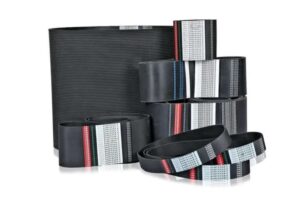
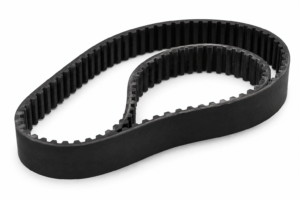
Rubber timing belts | Automated machinery and synchronous drives | Precise power transmission |
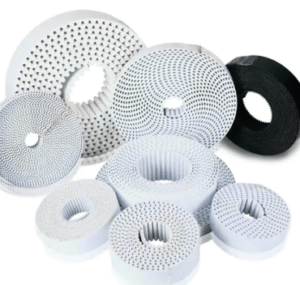
PU timing belts | Packaging, automation and material handling | Wear resistance and accurate movement |
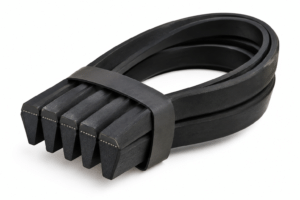
Rubber banded belts | Heavy-duty machinery and fluctuating loads | Improved belt stability in suitable drives |
Poly V-belts | Compact and high-speed drive systems | Efficient power transmission in compact spaces |
Flat belts | Selected transmission and conveying applications | Smooth and consistent operation |
Industrial buyers should select belts according to their machinery requirements, operating environment, power transmission needs and pulley compatibility.
A manufacturer offering multiple belt categories can also help businesses streamline replacement orders and recurring procurement requirements.
What Technical Specifications Should Buyers Check Before Purchasing Industrial Belts?
Industrial buyers should check belt dimensions, material composition, belt profile, load capacity, operating speed, temperature resistance and pulley compatibility before purchasing industrial belts.
Selecting products with appropriate technical specifications helps reduce premature belt wear, equipment failure and unexpected production interruptions.
Technical Specification | Why It Matters |
Belt length and width | Ensures compatibility with the machinery and drive system |
Belt profile | Determines compatibility with pulley grooves |
Tooth pitch | Ensures correct engagement in timing belt systems |
Number of teeth | Helps determine timing belt length and compatibility |
Belt material | Influences flexibility, durability and environmental resistance |
Load capacity | Determines suitability for power transmission requirements |
Operating temperature | Helps ensure suitability for working conditions |
Speed rating | Supports safe and efficient machinery operation |
Tensile reinforcement | Influences dimensional stability and strength |
Experienced industrial belt manufacturers should be able to provide relevant product specifications to help buyers select suitable belts for their applications.
What Industrial Belt Specifications Does Jigna Sales Corporation Offer?
Jigna Sales Corporation offers industrial belts in different profiles, dimensions and configurations to support various power transmission and automation requirements.
For example, its published HTD-2M PU timing belt catalogue includes the following product configurations:
Belt Model | Pitch Length | Sleeve Width | Number of Teeth |
98-2M | 98 mm | 160 mm | 49 |
130-2M | 130 mm | 200 mm | 65 |
250-2M | 250 mm | 200 mm | 125 |
360-2M | 360 mm | 450 mm | 180 |
750-2M | 750 mm | 450 mm | 375 |
Source: Jigna Sales Corporation – HTD-2M PU Timing Belt Catalogue.
For instance, a 250-2M timing belt has a tooth pitch of 2 mm, a pitch length of 250 mm and 125 teeth. Buyers should confirm the required finished belt width, pulley compatibility and load requirements with their timing belt supplier before placing an order.
Access to detailed product catalogues allows businesses to compare technical specifications and reduce errors during belt selection and procurement.
How Can You Check the Quality of an Industrial Belt Manufacturer?
Industrial buyers can evaluate a manufacturer’s quality by reviewing product specifications, material inspection procedures, testing capabilities, applicable technical standards and finished product consistency.
Before selecting a manufacturer, businesses should check:
- Raw material selection and inspection procedures.
- Dimensional accuracy and manufacturing consistency.
- Product testing and quality assessment capabilities.
- Tensile strength and wear resistance testing, where applicable.
- Availability of product catalogues and technical datasheets.
- Compliance with applicable product and industry standards.
- Product traceability and complaint resolution procedures.
Businesses should request supporting documentation wherever available rather than relying solely on product descriptions or pricing.
How Does Jigna Sales Corporation Maintain Industrial Belt Quality?
Jigna Sales Corporation has been operating in the industrial belt industry since 1972 and maintains a dedicated 500 sq. ft. testing facility to support its quality control activities.
According to its published company information, quality assessment covers different manufacturing stages, from raw material selection to finished product inspection.
These quality control practices, combined with over five decades of industry experience, provide businesses with tangible factors to consider when evaluating industrial belt manufacturers.
Buyers can discuss their specific technical and quality requirements with the company before confirming an order.
Source: About Jigna Sales Corporation.
Which Technical Standards Should Buyers Consider When Purchasing Industrial Belts?
Industrial buyers should consider applicable technical standards when evaluating belt dimensions, pulley compatibility and product specifications.
For example, ISO 4184 addresses datum-system lengths for classical and narrow V-belts. Such standards provide technical references for identifying and comparing V-belt dimensions.
When purchasing industrial vee belts or timing belts, buyers should request relevant documentation covering:
- Belt profiles and dimensional specifications.
- Rated power transmission capacity.
- Material and reinforcement specifications.
- Recommended operating conditions.
- Applicable quality and testing standards.
- Pulley compatibility and installation requirements.
Businesses should confirm which technical standards apply to the specific belt being purchased rather than assuming that all industrial belts follow the same specifications.
What Is the Difference Between a Timing Belt Manufacturer, Distributor, Dealer and Importer?
A timing belt manufacturer produces timing belts, while a distributor, dealer, supplier or importer typically sources and makes these products available to industrial buyers. Some businesses operate across multiple roles, offering manufacturing and distribution services under one organisation.
Supplier Type | Primary Role | Suitable For |
Timing belt manufacturer | Manufactures timing belts according to specific materials, profiles and production requirements | Direct manufacturing and customised requirements |
Timing belt distributor | Distributes products from one or more manufacturers | Regular procurement and multiple product options |
Timing belt supplier | Sources and supplies belts according to customer requirements | Industrial and commercial purchasing |
Timing belt dealers | Sell timing belts across different sizes, profiles and brands | Standard purchases and replacement requirements |
Timing belt importer | Sources timing belts from international manufacturers | Specialised and internationally sourced products |
Whether working with a timing belt distributor, manufacturer or importer, businesses should verify product authenticity, technical specifications, availability and after-sales support.
Jigna Sales Corporation operates across manufacturing, supplying, distribution and exporting, offering businesses access to multiple industrial belt categories through a single procurement partner.
What Should Businesses Check Before Ordering Industrial Belts in Bulk?
Before ordering industrial belts in bulk, businesses should confirm minimum order quantities (MOQ), technical specifications, pricing, stock availability, delivery lead times and replacement policies.
Bulk procurement requires careful planning because incorrect product selection or inconsistent quality can lead to operational disruptions and unnecessary expenses.
Industrial buyers should discuss the following requirements with their suppliers:
- Minimum order quantity: Confirm the minimum quantity required for standard and customised products.
- Bulk order pricing: Request quotations according to the required order volume.
- Sample availability: Check whether samples are available for compatibility evaluation.
- Customisation: Discuss application-specific dimensions, profiles and material requirements.
- Delivery lead time: Confirm expected dispatch and delivery schedules.
- Repeat order availability: Ensure the same belt specifications can be sourced for future requirements.
- Replacement policy: Understand the terms applicable to defective or incorrectly supplied products.
Reliable industrial belt manufacturers should communicate these details clearly before confirming an order.
What Information Should Buyers Provide When Requesting an Industrial Belt Quotation?
Providing complete technical information helps manufacturers identify suitable products, prepare accurate quotations and reduce procurement errors.
Businesses should provide the following details when requesting an industrial belt quotation:
Information Required | Example |
Belt type | V-belt, rubber timing belt or PU timing belt |
Belt profile | A section, B section or HTD-2M |
Belt identification number | 250-2M |
Pitch length | 250 mm |
Number of teeth | 125, where applicable |
Finished belt width | According to machinery requirements |
Required quantity | Sample, replacement or bulk order |
Machinery application | Packaging, automation or power transmission |
Operating conditions | Speed, load and temperature |
Delivery location | Mumbai or other industrial locations |
If the existing belt identification number is unavailable, buyers can share photographs, measurements and machinery details with their supplier to assist with product identification.
Whether sourcing products through timing belt dealers or a timing belt manufacturer, providing complete specifications can help prevent unnecessary delays and incorrect purchases.
Businesses can share their requirements with Jigna Sales Corporation to discuss product suitability, availability, pricing and quotations.
How Can Industrial Belts Help Reduce Machine Downtime and Maintenance Costs?
Industrial belts that are correctly selected, installed and maintained can help reduce machine downtime by supporting efficient power transmission and minimising premature wear.
Choosing belts solely based on their initial purchase price may result in frequent replacements and higher maintenance expenses if the products are unsuitable for the application.
Businesses should consider the total cost of ownership, including purchase price, expected service life, replacement frequency, maintenance requirements and potential production downtime.
What Causes Premature Industrial Belt Failure?
Premature industrial belt failure can result from incorrect tension, pulley misalignment, excessive loads, worn pulleys, unsuitable belt profiles and incompatible operating conditions.
The following technical considerations can help maintenance teams identify common belt problems:
Common Belt Problem | Possible Cause | Recommended Action |
Excessive belt wear | Incorrect tension or pulley misalignment | Check drive alignment and specified tension |
Belt slippage | Worn pulley grooves or insufficient tension | Inspect pulley condition and belt tension |
Premature cracking | Small pulley diameter or unsuitable operating conditions | Review belt and pulley specifications |
Timing belt tooth wear | Incorrect tooth profile, tension or excessive load | Confirm pulley compatibility and load requirements |
Uneven belt edge wear | Pulley misalignment or tracking problems | Inspect alignment and belt tracking |
Frequent belt breakage | Excessive load or unsuitable belt selection | Review drive requirements and rated capacity |
Jigna Sales Corporation also advises buyers considering rubber banded belts to provide their drive details before finalising product selection. Pulley groove spacing and drive configurations are important considerations when selecting these belts.
Businesses should share their machinery specifications and operating requirements with industrial belt manufacturers rather than selecting replacement belts solely based on price or physical appearance.
Technical references: Jigna Sales – Rubber Banded Belts.
Which Industries Require Reliable Industrial Belt Manufacturers?
Industrial belt manufacturers support businesses across industries that depend on power transmission, synchronous movement, automation and material handling.
Different industries require specific belt configurations based on machinery design, operational loads, speed and environmental conditions.
Industry | Common Industrial Belt Applications |
Automotive | Production machinery and assembly systems |
Textile | Spinning, weaving and processing machinery |
Packaging | Packaging machines and automated production lines |
Pharmaceutical | Processing and packaging equipment |
Food processing | Suitable conveying and processing systems |
Engineering | Industrial motors, pumps and compressors |
Automation | Synchronous drives and positioning systems |
Agriculture | Agricultural machinery and processing equipment |
Manufacturing | Industrial production equipment and power transmission systems |
Businesses should select a timing belt supplier or industrial belt manufacturer that offers products suitable for their industry’s technical and operational requirements.
For specialised applications, such as food-contact environments or high-temperature machinery, buyers should confirm the required material properties and applicable compliance documentation.
What Questions Should You Ask an Industrial Belt Manufacturer Before Placing an Order?
Asking the right questions helps industrial buyers evaluate a manufacturer’s technical capabilities, product quality and commercial reliability.
Before finalising a supplier, businesses should ask:
- What types of industrial belts do you manufacture or supply?
- Can you provide detailed product specifications and technical datasheets?
- What quality control and product testing procedures do you follow?
- Can you supply belts for customised machinery requirements?
- What is your minimum order quantity for standard and specialised belts?
- Can you fulfil bulk and recurring industrial belt orders?
- What is the expected delivery lead time?
- Can you help identify suitable replacement belts?
- Do you provide technical assistance for product selection?
- Can you supply products with consistent specifications for repeat orders?
The answers to these questions can help businesses compare industrial belt manufacturers objectively and select a suitable long-term procurement partner.
Why Choose Jigna Sales Corporation as Your Industrial Belt Manufacturer in India?
Jigna Sales Corporation is an industrial belt manufacturer, supplier, distributor and exporter based in Mumbai, India. Established in 1972, the company offers various industrial belt products through its portfolio and brands, Syncrodrive and Optiset.
Businesses evaluating industrial belt manufacturers in India can consider Jigna Sales Corporation for the following reasons:
- Over five decades of industry experience: Operating in the industrial belt industry since 1972.
- Dedicated testing facility: A 500 sq. ft. facility supporting product quality assessment.
- Quality control processes: Inspection across different stages of manufacturing, from raw material selection to finished products.
- Extensive product portfolio: Industrial V-belts, cogged belts, rubber banded belts, Poly V-belts, rubber timing belts and PU timing belts.
- Detailed technical information: Published product catalogues containing belt dimensions, tooth profiles and product configurations.
- Multiple procurement capabilities: Manufacturing, supplying, distribution and exporting.
- Application-specific product selection: Different belt categories and configurations suitable for various machinery requirements.
Whether you are looking for industrial vee belts, a timing belt supplier or a timing belt distributor in India, Jigna Sales Corporation offers multiple industrial belt categories through a single procurement partner.
Where Can Businesses Buy Industrial Belts in Mumbai?
Businesses looking for industrial belts in Mumbai can contact Jigna Sales Corporation, an industrial belt manufacturer and supplier operating since 1972.
The company offers industrial V-belts, rubber timing belts, PU timing belts, cogged belts, rubber banded belts and other power transmission products for various machinery requirements.
Business Information | Details |
Company Name | Jigna Sales Corporation |
Established | 1972 |
Industry Experience | Over 50 years |
Location | 39, Nagdevi Cross Lane, Ground Floor, Mumbai, Maharashtra – 400003 |
Business Type | Manufacturer, Supplier, Distributor and Exporter |
Brands | Syncrodrive and Optiset |
Contact Number | +91 9029056060 |
Website |
Industrial buyers can contact the company with their belt specifications, machinery requirements and required quantities to discuss product availability and quotations.
Choose the Right Industrial Belt Partner for Long-Term Business Efficiency
Selecting the right industrial belt manufacturer is an important decision that affects machinery performance, maintenance expenses and production reliability. Businesses should prioritise technical compatibility, consistent product quality, manufacturing experience and dependable supply rather than focusing only on initial product pricing.
With over five decades of industry experience, a dedicated testing facility and an extensive industrial belt portfolio, Jigna Sales Corporation offers businesses an established procurement option for various power transmission requirements.
Whether you are comparing industrial belt manufacturers in India, looking for industrial vee belts, searching for a timing belt importer or evaluating a reliable timing belt distributor, Jigna Sales Corporation can help you explore suitable product options.
Contact Jigna Sales Corporation today to discuss your industrial belt requirements and request a quotation.
FAQ's
Evaluate manufacturing experience, product quality, technical specifications, testing capabilities, product range, supply reliability and technical support before selecting an industrial belt manufacturer.
Jigna Sales Corporation is an established Mumbai-based industrial belt manufacturer, supplier and distributor operating since 1972. It offers multiple industrial belt categories and maintains a dedicated product testing facility.
Jigna Sales Corporation offers a broad range of industrial drive belts, including V-belts, cogged belts, rubber banded belts, Poly V-belts, rubber timing belts and PU timing belts.
The minimum order quantity depends on the belt type, dimensions, customisation requirements and supplier policies. Buyers should confirm the MOQ directly with the supplier before placing an order.
Rubber timing belts are commonly used in synchronous power transmission, while PU timing belts are often selected for applications requiring wear resistance and precise movement. The right choice depends on machinery specifications and operating conditions.
Check the supplier’s industry experience, product range, technical documentation, quality assurance, product availability and delivery capabilities. Request specifications to confirm compatibility with your machinery.
Appropriate material construction, correct belt sizing, suitable load capacity, proper installation and regular maintenance contribute to industrial V-belt durability and long-term cost efficiency.
Businesses should provide the belt type, model number, dimensions, machinery application, required quantity and delivery location to the manufacturer or supplier to receive a suitable quotation.